Ajit Doval Biography: Age, NSA Career & Family
Ajit Doval is India’s NSA born January 20, 1945. Longest-serving National Security Advisor, Kirti Chakra recipient. Married to Aruni with sons Shaurya and Vivek.
- Quick Facts About Ajit Doval
- Early Life and Family Background
- Education and Early Career
- Intelligence Bureau Career and Covert Operations
- Operation Black Thunder and Kirti Chakra
- IC-814 Hijacking and Crisis Management
- Director of Intelligence Bureau
- Post-Retirement Activities and Think Tank Work
- Appointment as National Security Advisor
- Rescue Operations and Crisis Management as NSA
- Surgical Strikes and Balakot Airstrike
- Doklam Standoff and Border Management
- Operation Sindoor and Counter-Terrorism Strategy
- Revocation of Article 370
- Personal Life and Family
- Philosophy and Strategic Vision
- Indigenous Defense and Technology Focus
- Awards and Recognition
- Legacy and Continuing Influence
- Final Thoughts
- Frequently Asked Questions
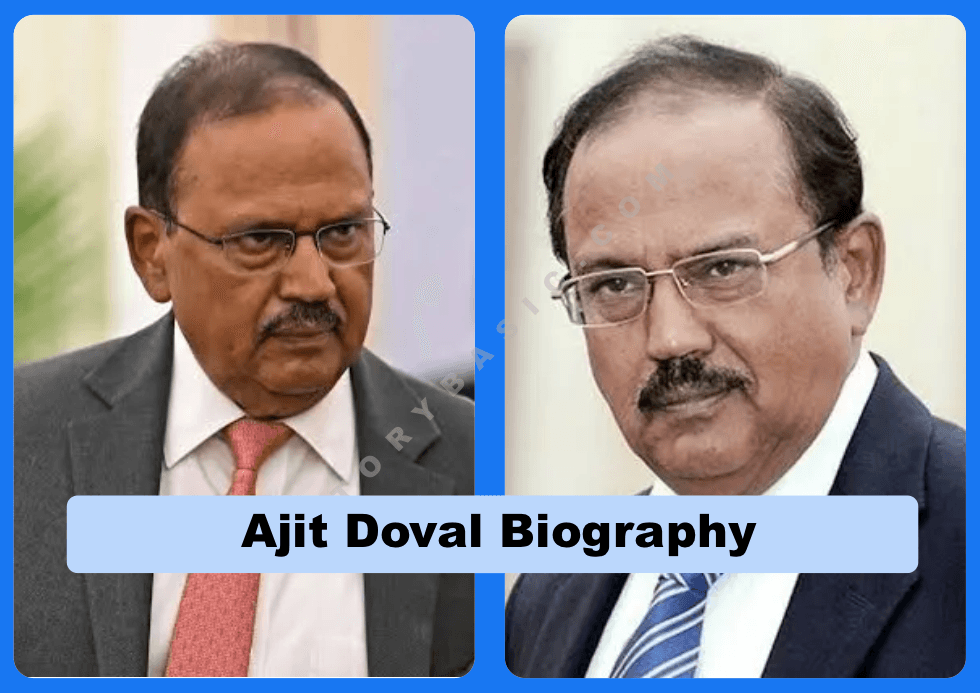
Ajit Kumar Doval stands as one of India’s most influential security figures and the nation’s longest-serving National Security Advisor. Born on January 20, 1945, in Pauri Garhwal, Uttarakhand, he is a retired Indian Police Service officer, former Intelligence Bureau Director, and legendary spymaster. At 81 years old, he continues serving his third consecutive five-year term as NSA, a position he has held since 2014 with Cabinet rank status since 2019.
Known as India’s “James Bond,” Doval’s career spans over 33 years in intelligence operations, including seven years undercover in Pakistan. He is the first police officer to receive the Kirti Chakra, India’s second-highest peacetime gallantry award. From the 2019 Balakot airstrike to Operation Sindoor in 2025, Doval has been the architect of India’s most decisive counter-terrorism operations. His strategic vision and operational precision have fundamentally reshaped India’s national security posture in the 21st century.
Quick Facts About Ajit Doval
| Detail | Information |
|---|---|
| Full Name | Ajit Kumar Doval |
| Date of Birth | January 20, 1945 |
| Age | 81 years (as of 2026) |
| Birthplace | Ghiri Banelsyun, Pauri Garhwal, Uttarakhand |
| Profession | National Security Advisor, Former IPS Officer |
| Position | NSA of India (2014-Present) |
| Spouse | Aruni Doval (m. 1972) |
| Children | Shaurya Doval, Vivek Doval |
| Education | M.A. Economics, National Defence College |
| Famous For | Longest-serving NSA, Kirti Chakra Recipient |
Early Life and Family Background
Ajit Doval was born in Ghiri Banelsyun village in Pauri Garhwal, then part of United Provinces in British India, now in Uttarakhand. He comes from a disciplined military family. His father, Major Gunanand Doval, served as an officer in the Indian Army’s Bengal Sappers for 36 years. His mother, Indra Doval, was a homemaker who instilled strong values in her children.
Growing up in the serene hills of Uttarakhand, young Ajit was exposed to military discipline from an early age. His father’s service in the army created an environment where patriotism and duty were not just concepts but a way of life. The Doval family comes from the Garhwali Brahmin community, known for their martial traditions and service to the nation.
The values of courage, integrity, and selfless service were embedded in Doval’s character from childhood. His upbringing in a military household prepared him for a career that would demand extraordinary sacrifice and unwavering commitment to national security. These formative years in the mountains of Garhwal shaped the man who would become India’s most trusted security advisor.
Education and Early Career
Doval received his early education at Ajmer Military School in Ajmer, Rajasthan. This institution, known for its rigorous academic and physical training, further strengthened his disciplined approach to life. The military school environment taught him leadership, strategy, and the importance of teamwork.
He completed his bachelor’s and master’s degrees in economics from Agra University in 1967. During his master’s program, he secured first position, demonstrating his intellectual capabilities. This academic excellence in economics provided him with analytical skills that would prove invaluable in his intelligence career.
The following year, Doval cleared the prestigious Union Public Service Commission examination in 1968 and joined the Indian Police Service as a Kerala cadre officer. At just 23 years old, he embarked on what would become one of the most distinguished careers in Indian law enforcement and intelligence. He later graduated from the 30th course of the National Defence College, New Delhi, in 1990, further enhancing his strategic understanding of national security.
Intelligence Bureau Career and Covert Operations
Doval’s initial posting was in Kerala, where he served as Assistant Superintendent of Police in Kottayam district. In 1971, communal riots erupted in Thalassery, Kannur district, which local police officers struggled to control. Doval’s effective handling of this volatile situation brought him to the attention of senior officials in Delhi.
In 1972, he was transferred to the Intelligence Bureau, marking the beginning of his legendary career in intelligence operations. His first major assignment was in Mizoram during the Mizo National Front insurgency, which sought to establish an independent sovereign state. Doval’s infiltration tactics and negotiation skills were remarkable. He succeeded in winning over six of Laldenga’s seven commanders, effectively dismantling the insurgency from within.
His undercover work in Pakistan remains the stuff of legend. For seven years, Doval lived as a Muslim in Pakistan without his cover being blown. He gathered critical intelligence on Pakistan’s support for terrorism and separatist movements in India. During this period, he witnessed firsthand the extent of Pakistan’s involvement in anti-India activities.
An interesting incident from his Pakistan posting reveals his resourcefulness. A man with a white beard identified him as a Hindu despite his Muslim disguise. Initially resisting, Doval had to acknowledge the truth when the man pointed to his pierced ear, a Hindu tradition. The stranger revealed he too was a Hindu forced to live as a Muslim after his family was killed in religious violence. This encounter exposed the human cost of partition and religious conflict.
Operation Black Thunder and Kirti Chakra
In 1989, Doval was granted the Kirti Chakra, one of India’s highest gallantry awards, becoming the first police officer to receive a medal previously given only as a military honor. He received this distinction for his role in Operation Black Thunder II in 1988, which aimed to flush out terrorists from the Golden Temple in Amritsar.
During this operation, Doval disguised himself as a rickshaw puller and entered the Golden Temple complex. He convinced militants that he was an ISI operative, gaining their trust and extracting critical intelligence about their positions, weapons, and plans. This information proved instrumental in the successful conclusion of the operation with minimal casualties.
His official citation reads: “Shri Ajit Kumar Doval was given several sensitive assignments directed against certain hard core terrorists. These assignments required a high degree of courage and dedication. It also put his personal security in peril. Regardless of the risk to his personal safety, Shri Doval prepared and executed plans against terrorists with a high degree of success bringing glory to his organization.”
Doval became the youngest police officer to receive the Police Medal for Meritorious Service, earning it after just six years in the force when it typically takes 14 years. He also received the President’s Police Medal for his exceptional contributions in Mizoram and Sikkim. These early awards established his reputation as an officer of extraordinary courage and capability.
IC-814 Hijacking and Crisis Management
Doval was one of three Indian negotiators deployed to Kandahar, Afghanistan, in December 1999 to secure the release of passengers from hijacked Indian Airlines flight IC-814. The Airbus A300 had been commandeered by terrorists and forced to fly to multiple locations before landing in Taliban-controlled Kandahar.
The negotiation was incredibly complex, involving not just the hijackers but also Taliban authorities and various international stakeholders. India ultimately had to release three terrorists, including Masood Azhar, to secure the passengers’ freedom. This experience deeply influenced Doval’s views on terrorism and the need for proactive rather than reactive counter-terrorism strategies.
Throughout his career with the Intelligence Bureau, Doval was involved in handling all 15 hijackings of Indian Airlines aircraft that occurred between 1971 and 1999. His crisis management skills and ability to negotiate under extreme pressure saved countless lives. He received counter-terrorism training under M.K. Narayanan, who would later become India’s third National Security Advisor.
Director of Intelligence Bureau
Doval served as Director of the Intelligence Bureau from 2004 to 2005, after leading its operations wing for over a decade. During his tenure as Director, he modernized intelligence gathering techniques and strengthened coordination between various security agencies. He was the founder chairman of the Multi-Agency Centre and the Joint Task Force on Intelligence, which improved inter-agency cooperation.
His diplomatic assignments included postings at the Indian High Commission in Islamabad and London. These assignments gave him valuable exposure to international intelligence cooperation and diplomatic protocols. His field assignments spanned insurgency-hit areas including Mizoram, Sikkim, Punjab, and Jammu and Kashmir, making him one of India’s most experienced counter-insurgency experts.
He retired as chief of the Intelligence Bureau in January 2005. At 60, Doval left active service but remained deeply engaged in national security discourse. His retirement marked the end of a 33-year career in intelligence operations, but it was far from the end of his service to the nation.
Post-Retirement Activities and Think Tank Work
After retirement, Doval did not fade into obscurity. He gave lectures at prestigious institutions, wrote op-eds for national newspapers, and provided expert analysis on security issues. His writings focused on India’s internal vulnerabilities, left-wing extremism, illegal immigration from Bangladesh, and Pakistan’s state-sponsored terrorism.
Around 2008, he helped establish the Rashtriya Raksha University in Gujarat, an institution dedicated to police, security, and criminal justice education. This university trains officers from various security agencies and has become a center of excellence in security studies.
In 2009, he became founder director of the Vivekananda International Foundation, a public policy think tank based in New Delhi, and served as its director until his appointment as NSA. VIF emerged as one of India’s most influential think tanks on security and strategic affairs. Under Doval’s leadership, it produced research on counter-terrorism, border management, cyber security, and geopolitical issues.
In 2011, Doval co-authored a report titled “Indian Black Money Abroad: In Secret Banks and Tax Havens” for the Bharatiya Janata Party. The report called for strict action against tax havens and offshore financial entities. His co-author was S. Gurumurthy, an RSS ideologue who later became a Reserve Bank of India director.
Appointment as National Security Advisor
In 2014, following the election of Narendra Modi as Prime Minister, Ajit Doval was appointed as the NSA. At 69, he was entrusted with India’s highest security position. Prime Minister Modi’s choice of Doval signaled a shift toward more assertive national security policies and decisive action against terrorism.
In October 2018, he was appointed Chairman of the Strategic Policy Group, which is the first tier of a three-tier structure at the National Security Council and forms the nucleus of its decision-making apparatus. As NSA, Doval is ex officio agency executive of the National Security Council, chairperson of the Defence Planning Committee, and executive council head of the Nuclear Command Authority.
In June 2019, NSA Ajit Doval was elevated to the rank of Cabinet Minister with a second 5-year term. Doval is the first NSA to hold such a rank. He was previously a Minister of State. This elevation reflected his growing influence and the government’s confidence in his strategic vision.
On 13 June 2024, Ajit Doval was granted a third five-year extension for his tenure as National Security Advisor of India. Doval would go onto become India’s longest serving NSA. His continuous reappointment across three terms demonstrates his indispensability to India’s security architecture.
Rescue Operations and Crisis Management as NSA
One of Doval’s early successes as NSA came in June 2014, just weeks after his appointment. When 46 Indian nurses were trapped in a hospital in Tikrit, Iraq, after ISIS captured Mosul, Doval personally flew to Iraq to assess the situation. He negotiated with Iraqi government officials and eventually secured the nurses’ release through Kurdish authorities. An Air India plane brought them safely home on July 5, 2014.
In May 2020, Doval headed negotiations that resulted in Myanmar’s military forces handing over 22 militant leaders active in Assam and other northeastern states to India. This diplomatic success demonstrated his ability to leverage India’s relationships with neighboring countries for counter-terrorism objectives.
On 26 February 2020, Ajit Doval walked the streets of riot-hit northeast Delhi to assess the situation and reassure the local residents. During communal riots that claimed over 50 lives, Doval’s presence on the ground helped calm tensions. He personally interacted with residents, police officers, and community leaders to restore peace.
On 15 September 2020, Doval walked out of a virtual SCO meeting after Pakistan projected a fictitious map omitting parts of India. This bold move sent a clear message that India would not tolerate Pakistan’s territorial claims and cartographic aggression. It demonstrated Doval’s willingness to take principled stands on sensitive issues.
Surgical Strikes and Balakot Airstrike
India’s September 2016 surgical strike across the Line of Control in Pakistan were conducted under the supervision of Doval. Following a terrorist attack on an Indian Army base in Uri that killed 19 soldiers, India conducted special forces raids on terrorist launch pads across the LoC. This marked a departure from India’s traditional defensive posture.
The February 2019 Balakot airstrikes across the border in Pakistan were conducted under Doval’s supervision. After a Pakistan-based militant attacked a CRPF convoy with a car bomb in Pulwama which resulted in the deaths of 40 CRPF personnel, the Indian Air Force conducted an airstrike on terrorist bases in Pakistan.
Doval was one of the seven persons who knew about India’s classified 2019 Balakot airstrike, including Indian Navy, Army, Air Force chiefs and Prime Minister Narendra Modi. The operation involved Indian Air Force jets crossing deep into Pakistani territory to strike a Jaish-e-Mohammed training camp in Balakot, Khyber Pakhtunkhwa.
Following Pakistan’s retaliatory airstrikes and the capture of Indian pilot Abhinandan Varthaman, Doval held crucial talks with international counterparts including the U.S. Secretary of State and National Security Advisor. His diplomatic efforts helped secure Varthaman’s release within 60 hours while maintaining international pressure on Pakistan.
Doklam Standoff and Border Management
In 2017, Doval played a key role in resolving the Doklam standoff between India and China through diplomatic channels and negotiations. The 73-day military standoff in the Bhutan-China-India tri-junction area threatened to escalate into armed conflict. Doval’s back-channel diplomacy with his Chinese counterpart helped find a face-saving resolution for both nations.
His approach to border management emphasizes both military preparedness and infrastructure development. During his tenure, India has significantly enhanced road connectivity, surveillance capabilities, and troop deployments along the China border. The construction of tunnels, bridges, and all-weather roads has improved India’s logistical capabilities in border areas.
In 2024, during the Border Security Force investiture ceremony, Doval stated that India’s economic progress and internal security have been hampered by undefined borders in the north and west. He emphasized that even in the future, India’s borders may not be as secure as needed when compared with the country’s economic growth trajectory.
Operation Sindoor and Counter-Terrorism Strategy
In the 2025 India-Pakistan conflict following the Pahalgam terror attack, NSA Ajit Doval played a key role in formulating India’s strategic response. He coordinated Operation Sindoor, a series of precision airstrikes on terrorist camps located in Pakistan. On April 22, 2025, terrorists attacked tourists in Pahalgam, killing 26 civilians in a brutal, targeted manner.
Indian security forces launched Operation Sindoor in the intervening night of May 6-7, decimating nine terror camps, including the headquarters of Lashkar-e-Taiba and Hizbul Mujahideen, inside Pakistan as well as in Pakistan-occupied Kashmir. The operation demonstrated unprecedented precision, with Doval later revealing it lasted exactly 23 minutes.
Doval spoke with his counterparts from the US, UK, Saudi Arabia, UAE, Japan, Russia, China, and France, briefing them that Indian officials described the operation as “measured and non-escalatory,” aimed at neutralizing terrorist threats without provoking a broader conflict. This proactive diplomatic outreach prevented international pressure on India.
At the IIT Madras convocation in July 2025, Doval challenged foreign media coverage of the conflict. He stated that India hit all nine terrorist targets without missing any, while Pakistan failed to cause any damage in India. He famously challenged journalists to show even one photograph of any damage to Indian infrastructure, including a single broken glass pane.
Revocation of Article 370
Doval was an instrumental figure in the revocation of the special status of Jammu and Kashmir in August 2019. In the days leading up to the historic decision, he was deployed to Kashmir to oversee security arrangements. His presence ensured that the constitutional changes were implemented without major law and order problems.
Doval spent considerable time in the Kashmir Valley, meeting with security forces, local administrators, and community leaders. His ground-level assessment and strategic planning helped maintain peace during a potentially volatile period. The successful implementation of this major constitutional change without significant violence was attributed to his meticulous planning.
He continued monitoring the situation in Kashmir for months afterward, making multiple visits to ensure stability. His hands-on approach and direct engagement with security challenges have become hallmarks of his tenure as NSA. Critics and supporters alike acknowledge his decisive role in this contentious but strategically significant decision.
Personal Life and Family
Doval married Aruni Doval in 1972 and has two children, Shaurya and Vivek Doval. Aruni, born around 1950, comes from the Dasmana family in the village of Bagyali in Pauri Garhwal, the same region where Ajit was born. She is a retired teacher who has maintained a private profile throughout her husband’s distinguished career.
Shaurya Doval is an Indian politician and investment banker who is a member of the Bharatiya Janata Party and Executive Member of BJP Uttarakhand. Born on April 26, 1974, Shaurya studied at Hindu College, Delhi, and holds MBA degrees from the University of Chicago’s Booth School of Business and London Business School. He also has a chartered accountancy degree.
Shaurya is the founder and leader of India Foundation, a right-wing think tank that is closely associated with the Narendra Modi Government. He has over 30 years of international investment banking experience, having worked at GE Capital’s London office and Morgan Stanley’s investment banking division. He currently heads Torch Investment, a Singapore-based wealth management firm.
Vivek Doval, the younger son, is a chartered financial analyst working in the financial sector. He is recognized as a public policy thinker and private equity professional. He holds British citizenship and resides in Singapore. Both sons have faced media scrutiny due to their business activities, given their father’s position, though investigations have not established any wrongdoing.
The Doval family maintains a residence on Janpath Road in Delhi. Despite his powerful position, Ajit Doval has never led a high-profile or ostentatious lifestyle. Aruni occasionally appears at official events, representing the family at ceremonies and welfare exhibitions. The couple has successfully balanced public service with personal privacy.
Philosophy and Strategic Vision
Doval has consistently emphasized that India’s internal vulnerabilities pose a greater threat than external aggression. He has stated, “India’s internal vulnerabilities are much higher than its external vulnerabilities.” His writings regularly stress the importance of addressing domestic security challenges alongside external threats.
In 2006 and 2011, he identified illegal infiltration of Bangladeshis and left-wing extremism as India’s biggest internal security problems. By 2025, he announced that left-wing extremism had been reduced to less than 11 percent of the areas affected in 2014, demonstrating the success of coordinated security operations.
His doctrine of offensive defense has transformed India’s approach to Pakistan-sponsored terrorism. Rather than merely reacting to attacks, India under Doval’s guidance has adopted a policy of proactive deterrence and punitive action. The surgical strikes, Balakot airstrikes, and Operation Sindoor exemplify this strategic shift.
In January 2026, Doval addressed the “Viksit Bharat Young Leaders Dialogue,” where he called on the youth to “avenge our history” through proactive national reconstruction. This address framed nation-building as a form of civilizational resurgence, departing from traditional scholarly focus on historical grievances to emphasize constructive action.
Indigenous Defense and Technology Focus
Doval has been a strong advocate for indigenous defense manufacturing and technological self-reliance. Following border tensions with China in 2020, he spearheaded the decision to indigenize India’s communication systems. He initiated a project to develop India’s own 5G technology for defense applications, prioritizing data protection and communication security.
At the IIT Madras convocation, Doval revealed that while China spent $300 billion over 12 years developing 5G, India developed a completely indigenous communication system in just two and a half years. This achievement, accomplished in collaboration with IIT Madras, demonstrates India’s growing technological capabilities.
Operation Sindoor showcased India’s indigenous defense equipment, including BrahMos missiles and Integrated Air Command and Control Systems. Doval has emphasized that reliance on indigenous technology not only strengthens national security but also builds confidence in India’s defense capabilities among potential international clients in Southeast Asia and Africa.
Awards and Recognition
Beyond the Kirti Chakra, Police Medal, and President’s Police Medal, Doval has received numerous other honors. In 2022, he was awarded the Uttarakhand Gaurav Samman by his home state. He has received honorary doctorates from Dr. Bhimrao Ambedkar University in December 2017, Kumaun University in May 2018, and Amity University in November 2018.
His life and operations have been featured in various media. Epic TV’s show “Adrishya” highlighted his success against Khalistani separatists during Operation Black Thunder. In the 2019 film “Uri: The Surgical Strike,” his character was portrayed by actor Paresh Rawal. The 2025 film “Dhurandhar” and its 2026 sequel featured R. Madhavan portraying “Ajay Sanyal,” a character heavily inspired by Doval.
The 2025 web series “Salakaar” on JioHotstar dramatized his covert operations in Pakistan during the 1970s, with Naveen Kasturia playing his younger self and Purnendu Bhattacharya as his present-day character. These portrayals have brought his remarkable career to popular attention, though he himself maintains a low public profile.
Legacy and Continuing Influence
Doval is widely considered to be one of Modi’s most powerful and trusted advisors, with major influence over India’s national security and foreign affairs. His tenure has witnessed a fundamental transformation in how India responds to security threats. The days of strategic restraint have given way to an era of decisive action and proactive deterrence.
Under his guidance, India has significantly expanded the National Security Council Secretariat, which operates from Sardar Patel Bhavan in Delhi. From 2014 to now, the NSCS has grown in importance and strength. Two additional deputy NSAs were appointed after Doval took charge, reflecting the expanded scope of national security challenges.
Even in his 80th year, Doval continues to be critically important to government’s strategic plans, especially at a time when Army Chief Upendra Dwivedi has stated that the ground situation along the Line of Actual Control remains stable but sensitive. His experience and strategic acumen remain invaluable as India navigates complex security challenges on multiple fronts.
His emphasis on intelligence-led operations, indigenous technological development, and assertive responses to terrorism has established new paradigms for Indian national security policy. Future NSAs will operate in the framework that Doval has created, making him arguably the most consequential figure in this position since its inception in 1998.
Final Thoughts
Ajit Doval’s journey from a small village in Uttarakhand to becoming India’s most powerful security bureaucrat is a testament to dedication, courage, and strategic brilliance. At 81, he shows no signs of slowing down, continuing to serve with the same intensity that defined his early career. His 33 years in intelligence operations followed by over a decade as NSA represent an unparalleled contribution to national security.
From going undercover in Pakistan as a young IPS officer to coordinating precision strikes against terrorist infrastructure as NSA, Doval has consistently demonstrated exceptional courage and operational excellence. His role in Operation Black Thunder, the IC-814 negotiations, surgical strikes, Balakot airstrikes, and Operation Sindoor has made him a legendary figure in Indian security circles.
What sets Doval apart is not just his operational success but his strategic vision. He has transformed India from a reactive power that absorbed terrorist attacks to a proactive nation that strikes back decisively. His emphasis on indigenous technology, intelligence-led operations, and diplomatic outreach has created a comprehensive security architecture that addresses 21st-century challenges. As India aspires to become a major global power, Ajit Doval’s contributions have laid a strong foundation for the nation’s security in an increasingly complex geopolitical environment.
Frequently Asked Questions
Q1: Who is Ajit Doval?
Ajit Kumar Doval is India’s National Security Advisor, born on January 20, 1945, in Pauri Garhwal, Uttarakhand. He is a retired Indian Police Service officer and former Intelligence Bureau Director. He has been serving as the longest tenured National Security Advisor of India since 2014, currently in his third consecutive five-year term.
Q2: What is Ajit Doval’s age?
Ajit Doval is 81 years old as of 2026. Born on January 20, 1945, he recently celebrated his 80th birthday in January 2025. Despite his age, he continues serving as India’s NSA with Cabinet rank and remains actively involved in strategic decision-making.
Q3: What is Ajit Doval’s most famous operation?
Ajit Doval is famous for multiple operations including Operation Black Thunder II in 1988, for which he received the Kirti Chakra. As NSA, he coordinated the 2016 surgical strikes, the 2019 Balakot airstrike, and the 2025 Operation Sindoor. He also spent seven years undercover in Pakistan during the 1970s and 1980s.
Q4: Who is Ajit Doval’s wife?
Ajit Doval married Aruni Doval in 1972. Aruni, born around 1950, is from the Dasmana family in Bagyali village, Pauri Garhwal. She is a retired teacher who maintains a private profile and occasionally attends official events. The couple has been married for over 50 years.
Q5: How many children does Ajit Doval have?
Ajit Doval has two sons: Shaurya Doval and Vivek Doval. Shaurya is an investment banker, politician, and founder of India Foundation think tank. Vivek is a chartered financial analyst working in private equity and wealth management, currently residing in Singapore.
Q6: What is the Kirti Chakra award?
The Kirti Chakra is one of India’s highest gallantry awards, the second-highest peacetime military honor. In 1989, Ajit Doval became the first police officer to receive this medal, which was previously given only to military personnel. He received it for his role in Operation Black Thunder II at the Golden Temple.
Q7: What is Operation Sindoor?
Operation Sindoor was a series of precision airstrikes conducted by India on May 6-7, 2025, targeting nine terrorist camps in Pakistan and Pakistan-occupied Kashmir. The strikes were carried out in retaliation for the deadly terror attack in Kashmir’s Pahalgam on April 22, in which Pakistan-sponsored terrorists killed 26 civilians. The operation lasted 23 minutes and successfully destroyed all targets without any damage to Indian territory.