Brig. Gen. Oseni Omoh Braima Biography: Military Career & death
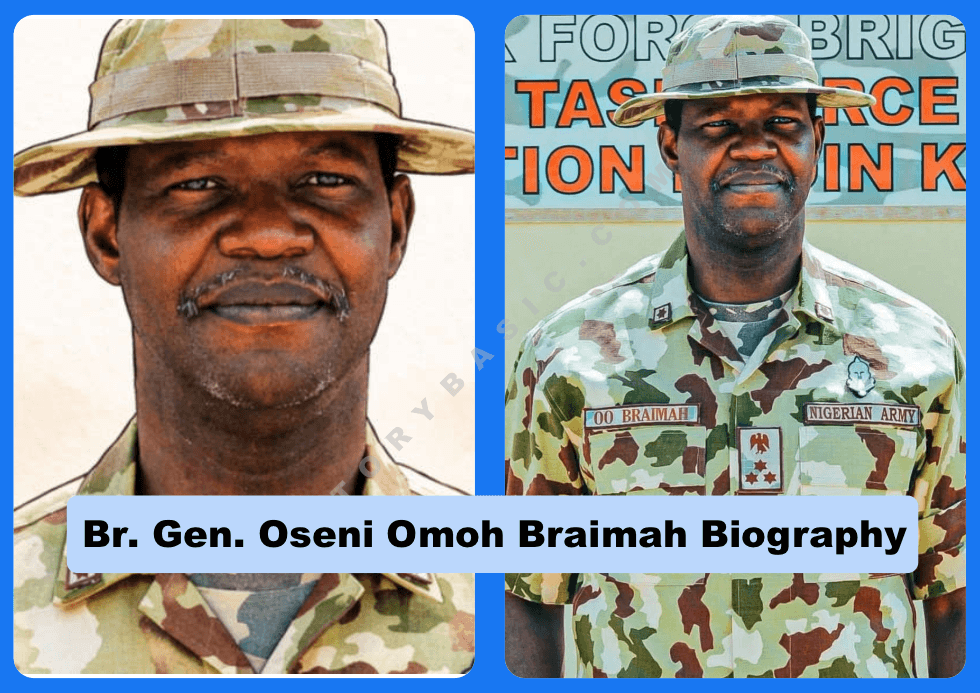
Brigadier General Oseni Omoh Braima was a Nigerian Army officer commissioned in 2000. Killed in Borno attack April 2026. Read his complete military biography.
- Quick Facts About Brigadier General Oseni Omoh Braima
- Educational Background and Military Training
- Early Military Career and Development
- Service in Operation Hadin Kai
- International Diplomatic Service
- Return to Operational Command
- Final Command at Benisheikh
- The Attack on Benisheikh
- Ultimate Sacrifice and National Response
- Legacy and Impact
- Final Thoughts
- Frequently Asked Questions
Brigadier General Oseni Omoh Braima was a distinguished Nigerian Army officer who dedicated over two decades to serving his nation. Commissioned into the Nigerian Army in September 2000, he rose through the ranks to become a respected military leader. His career was marked by extensive education, international service, and unwavering commitment to Nigeria’s security.
On April 9, 2026, Brigadier General Braima made the ultimate sacrifice while defending Nigeria against terrorism. He was killed alongside 17 soldiers during a coordinated attack by suspected ISWAP members on military formations in Benisheikh, Borno State. His death sent shockwaves through the nation and highlighted the ongoing challenges faced by Nigerian forces in the fight against insurgency.
Quick Facts About Brigadier General Oseni Omoh Braima
| Detail | Information |
|---|---|
| Full Name | Oseni Omoh Braima |
| Military Branch | Nigerian Army |
| Commission Date | September 2000 |
| Rank | Brigadier General |
| Last Position | Commander, 29 Task Force Brigade |
| Education | BA History (NDA), Multiple Master’s Degrees |
| Date of Death | April 9, 2026 |
| Place of Death | Benisheikh, Borno State |
| Age at Death | Mid-40s (approximate) |
| Notable Service | Operation Hadin Kai, UN Observer |
Educational Background and Military Training
Brigadier General Braima’s military journey began at the prestigious Nigerian Defence Academy. He obtained a Bachelor of Arts degree in History from the NDA, laying the foundation for his strategic thinking and leadership capabilities. His academic achievements reflected his intellectual curiosity and commitment to professional development.
His pursuit of advanced education distinguished him among his peers. Between 2004 and 2006, he earned a Master of Arts in International Relations and Strategic Studies from Benue State University. This qualification enhanced his understanding of global security dynamics and diplomatic relations. His academic background proved invaluable throughout his military career.
Recognizing the importance of international exposure, Braima sought education abroad. He obtained a Master’s degree in National Security Management and War Studies from the National Defence University in Islamabad, Pakistan. This experience provided insight into regional security challenges and counter-terrorism strategies employed in South Asia.
From 2016 to 2017, he achieved another significant milestone by obtaining a Master of Arts in Defence Studies from King’s College, London. Studying at one of the world’s premier institutions for war studies exposed him to cutting-edge military theory and contemporary defense strategies. He also earned a Diploma in Strategic Leadership and Management from the Chartered Management Institute, demonstrating his commitment to developing leadership capabilities beyond traditional military training.
Early Military Career and Development
After his commissioning in September 2000, Brigadier General Braima embarked on a military career spanning over 25 years. His early years in service involved various postings that built his operational experience and leadership skills. He demonstrated exceptional professionalism and dedication that would characterize his entire career.
His commitment to international peacekeeping became evident early in his career. From 2011 to 2012, he served as an Observer with the United Nations. This deployment exposed him to multinational military operations and peacekeeping protocols. The experience shaped his perspective on conflict resolution and humanitarian interventions.
In January 2014, he assumed the role of Deputy Chief of Staff at the Headquarters of the Guard Brigade. This prestigious position placed him at the heart of Nigeria’s military establishment. The Guard Brigade’s responsibility for protecting key government installations and personnel made this assignment particularly significant. He served in this capacity throughout 2014, gaining valuable experience in high-level military planning and coordination.
Service in Operation Hadin Kai
Brigadier General Braima’s most significant contributions came during his service in Nigeria’s counter-insurgency operations. From December 2019 to May 2021, he served as Chief J3 (DCOS G3) at the headquarters of Operation Hadin Kai in the North East. Operation Hadin Kai represents Nigeria’s comprehensive military campaign against Boko Haram and ISWAP insurgents.
As Chief J3, he was responsible for operations and planning, a critical role in coordinating military activities across the theater. His position required strategic thinking, resource allocation, and coordination between multiple units. The challenges of fighting an adaptive insurgency in difficult terrain demanded innovation and resilience.
His service during this period coincided with intensified military operations against terrorist groups. He contributed to planning and executing operations that aimed to degrade insurgent capabilities and protect civilian populations. The experience he gained in counter-insurgency warfare would prove crucial in his later command positions.
International Diplomatic Service
Following his operational tour in the North East, Brigadier General Braima transitioned to diplomatic service. From May 2021 to August 2024, he served as Defence Adviser at the Nigeria High Commission in Islamabad, Pakistan. This posting represented a significant shift from field operations to diplomatic engagement.
 Worth & Life" loading="lazy" width="180" height="120">
As Defence Adviser, he served as the primary military liaison between Nigeria and Pakistan. His responsibilities included facilitating defense cooperation, coordinating military training exchanges, and advising the High Commissioner on security matters. His previous education in Pakistan provided valuable context for this role.
The position required diplomatic finesse combined with military expertise. He represented Nigerian military interests while building relationships with Pakistani defense officials. His three-year tenure strengthened bilateral defense ties between the two nations. The posting also demonstrated the Nigerian military’s confidence in his ability to operate effectively in diplomatic environments.
Return to Operational Command
After completing his diplomatic assignment, Brigadier General Braima returned to operational duties in Nigeria. Between September 2024 and March 2025, he served as Chief of Staff at the 6 Division Headquarters of the Nigerian Army in Port Harcourt, Rivers State. The 6 Division is responsible for security in the South-South region of Nigeria.
This position placed him in charge of coordinating divisional operations and supporting the General Officer Commanding. Port Harcourt, as a major economic hub with oil infrastructure, presented unique security challenges. His role involved managing operations against illegal oil bunkering, kidnapping, and other criminal activities affecting the region.
His brief tenure at 6 Division demonstrated his versatility in handling diverse security challenges. The experience of commanding operations in both the North East and South-South regions gave him comprehensive understanding of Nigeria’s varied security landscape. His effectiveness in this role led to his next assignment in the counter-insurgency campaign.
Final Command at Benisheikh
In what would be his final posting, Brigadier General Braima assumed command of the 29 Task Force Brigade Headquarters in Benisheikh. As Brigade Commander of the 29 Task Force Brigade, he returned to the frontlines of Nigeria’s fight against terrorism. Benisheikh, located in Kaga Local Government Area of Borno State, sits in the heart of the insurgency-affected region.
The 29 Brigade operated under Operation Hadin Kai, conducting counter-insurgency operations against Boko Haram and ISWAP. The brigade’s area of responsibility included some of the most contested territory in the North East. His command required balancing offensive operations against terrorist groups with force protection and civilian engagement.
Under his leadership, the brigade conducted regular patrols, clearance operations, and defensive actions. The position demanded constant vigilance as insurgents frequently probed military positions seeking vulnerabilities. His previous experience in the theater informed his tactical decisions and operational planning.
The Attack on Benisheikh
In the early hours of April 9, 2026, insurgents launched a coordinated attack on multiple military positions. The insurgents invaded three military formations with heavy gunfire and explosives in Benisheikh, Ngamdu, and Pulka. The assault on the 29 Brigade Headquarters in Benisheikh proved particularly deadly.
Troops responded with exceptional courage, professionalism, and superior firepower under Brigadier General Braima’s command. The battle lasted several hours as soldiers fought to repel the attackers and protect their base. Despite their efforts, the insurgents inflicted significant casualties before being forced to retreat.
Local sources reported that the attackers came heavily armed and used explosives to breach defenses. The intensity of the assault overwhelmed defensive positions in several locations. The brigade commander, his second-in-command, and the Imam of the Brigade were among those killed, along with numerous officers and soldiers.
The coordinated nature of the attacks across multiple locations suggested sophisticated planning. Insurgents likely exploited intelligence about defensive positions and timing. The attackers set military vehicles ablaze and burned shops near the military formation, demonstrating the scale of the assault.
Ultimate Sacrifice and National Response
Brigadier General Oseni Omoh Braima died leading his troops in defense of their position. His death, along with 17 other soldiers, marked one of the deadliest attacks on Nigerian forces in recent months. The loss of such a senior officer highlighted the dangers faced by military personnel on the frontlines.
President Bola Tinubu confirmed the deaths and paid tribute to the fallen soldiers. “I extend my condolences to the families of our gallant soldiers, led by Brigadier-General Oseni Omoh Braimah, who made the ultimate sacrifice in the defence of our country”, the President stated. He described them as unforgettable heroes whose sacrifices would not be in vain.
The President characterized the attack as a sign of desperation by insurgents who had suffered significant losses in recent military operations. He urged the military high command and frontline troops not to be discouraged, promising continued government support. His statement emphasized the government’s commitment to defeating terrorism and ensuring the welfare of those who serve.
The Chairman of Kaga Local Government Area confirmed the casualties, having visited the military base shortly after the attack. Military authorities acknowledged the losses while emphasizing that insurgents were forced to retreat in disarray. The Defense Headquarters reaffirmed the Armed Forces’ resolve to continue counter-terrorism operations.
Legacy and Impact
Brigadier General Braima’s death represents a significant loss to the Nigerian Army and the nation. His 25-year career exemplified dedication, professionalism, and sacrifice. From his commissioning in 2000 to his death in 2026, he served Nigeria with distinction across multiple theaters and capacities.
His extensive education demonstrated the importance of continuous learning in military service. By earning multiple advanced degrees from institutions in Nigeria, Pakistan, and the United Kingdom, he embodied the ideal of the scholar-soldier. His academic credentials enhanced his operational effectiveness and strategic thinking.
His service with the United Nations and as Defence Adviser showcased Nigeria’s contributions to international peace and security. These assignments expanded his perspective beyond national boundaries and strengthened Nigeria’s diplomatic relationships. His ability to transition between operational, educational, and diplomatic roles highlighted his versatility.
The circumstances of his death underscore the ongoing challenges facing Nigeria’s security forces. Despite military gains against insurgents, terrorist groups retain the capability to launch deadly attacks. His sacrifice, along with those of his fallen comrades, demonstrates the human cost of the fight against terrorism in Nigeria’s North East.
Final Thoughts
Brigadier General Oseni Omoh Braima’s life and career represent the finest traditions of military service. His journey from a young officer commissioned in 2000 to a brigade commander leading troops in combat spans Nigeria’s recent military history. He witnessed and participated in the evolution of Nigeria’s security challenges and responses.
His commitment to education set him apart as a thinking soldier who understood that modern warfare requires intellectual as well as physical preparation. His willingness to serve wherever needed, whether in the North East, South-South, or abroad in Pakistan, demonstrated flexibility and dedication. His leadership in both peacetime and combat operations earned him the respect of subordinates and superiors alike.
The manner of his death, leading troops in defense against a terrorist attack, exemplifies courage and leadership. He did not direct operations from a safe distance but stood with his soldiers at a vulnerable forward base. His final act embodied the military values of honor, courage, and commitment that defined his career.
Nigeria has lost a dedicated servant and the Army a capable leader. His sacrifice joins those of countless other security personnel who have given their lives fighting insurgency. As Nigeria continues its struggle against terrorism, the example set by Brigadier General Oseni Omoh Braima will inspire future generations of military leaders.
 Worth & Career Journey" loading="lazy" width="180" height="120">
Frequently Asked Questions
Q1: Who was Brigadier General Oseni Omoh Braima?
Brigadier General Oseni Omoh Braima was a Nigerian Army officer commissioned in September 2000. He served for over 25 years in various capacities including operations commander, UN observer, and defence adviser. He was killed in action on April 9, 2026, while commanding the 29 Task Force Brigade in Benisheikh, Borno State.
Q2: What was his educational background?
He held a Bachelor of Arts in History from the Nigerian Defence Academy and multiple master’s degrees. These included degrees in International Relations and Strategic Studies from Benue State University, National Security Management from Pakistan’s National Defence University, and Defence Studies from King’s College, London. He also earned a diploma in Strategic Leadership and Management.
Q3: How did Brigadier General Braima die?
He was killed during a coordinated terrorist attack by suspected ISWAP members on April 9, 2026. The insurgents attacked the 29 Task Force Brigade Headquarters in Benisheikh using heavy gunfire and explosives. He died alongside 17 other soldiers while leading the defense of the military base.
Q4: What positions did he hold during his career?
His notable positions included UN Observer (2011-2012), Deputy Chief of Staff at Guard Brigade Headquarters (2014), Chief J3 at Operation Hadin Kai headquarters (2019-2021), Defence Adviser in Islamabad, Pakistan (2021-2024), Chief of Staff at 6 Division Port Harcourt (2024-2025), and Brigade Commander of 29 Task Force Brigade (until his death in 2026).
Q5: What is Operation Hadin Kai?
Operation Hadin Kai is Nigeria’s comprehensive military campaign against Boko Haram and ISWAP insurgents in the North East. Brigadier General Braima served in this operation both as Chief J3 (operations officer) from 2019-2021 and later as Brigade Commander of the 29 Task Force Brigade until his death.
Q6: What did President Tinubu say about his death?
President Bola Tinubu described Brigadier General Braima and the fallen soldiers as “unforgettable heroes.” He extended condolences to their families and praised their courage in defending Nigeria. The President characterized the attack as an act of desperation by weakened insurgents and vowed that their sacrifices would not be in vain.
Q7: What was the significance of his service in Pakistan?
From May 2021 to August 2024, he served as Defence Adviser at Nigeria’s High Commission in Islamabad. In this diplomatic role, he facilitated defense cooperation between Nigeria and Pakistan, coordinated military training exchanges, and advised on security matters. His previous education in Pakistan provided valuable context for strengthening bilateral military ties.