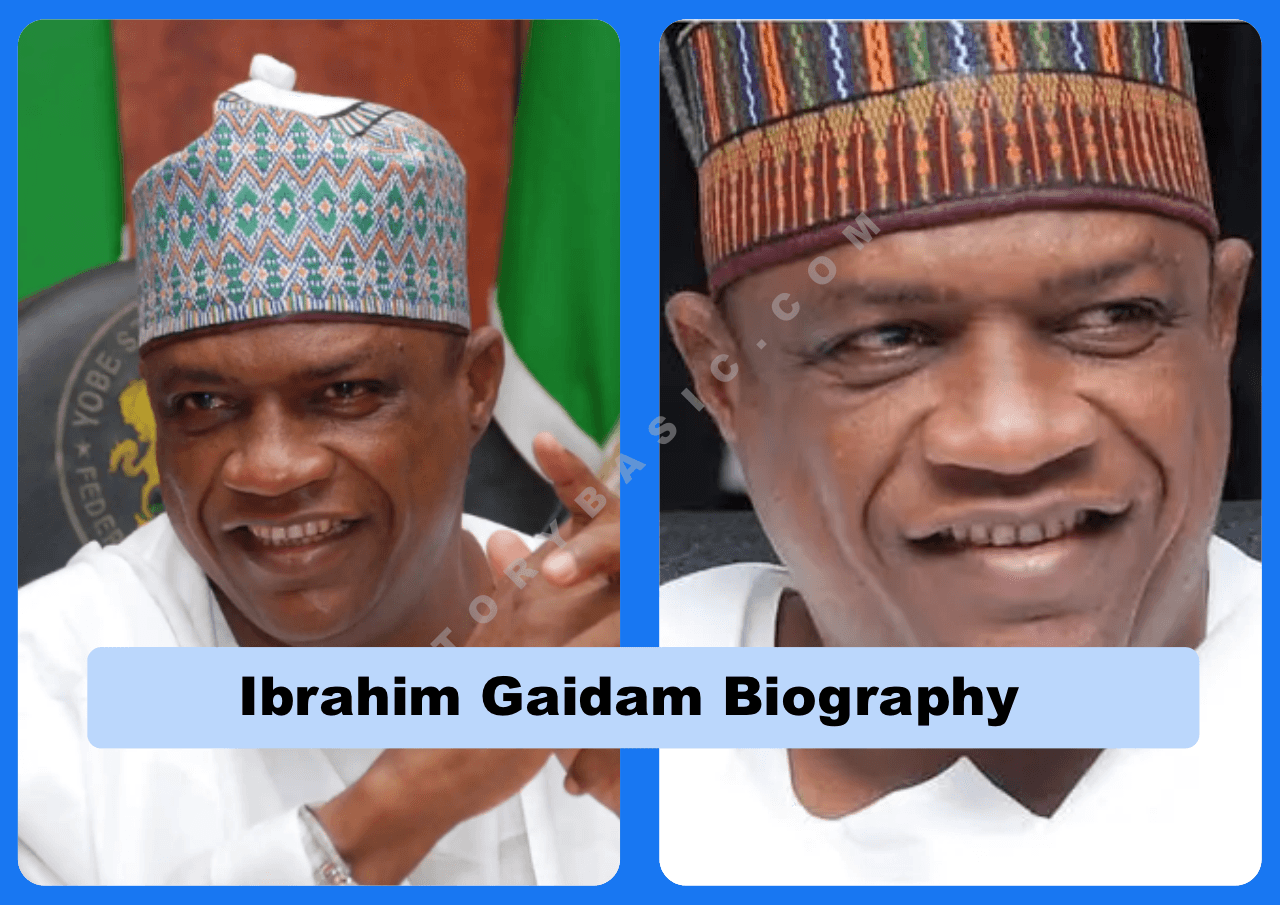
Ibrahim Gaidam Biography: Age, Net Worth & Career
Ibrahim Gaidam is a Nigerian politician born in 1956. Former Governor of Yobe State and current Minister of Police Affairs. Learn about his career, family & net worth. — trim to:
- Quick Facts About Ibrahim Gaidam
- Early Life and Family
- Education
- From Civil Servant to Commissioner: The Early Career
- Governor of Yobe State: A Decade of Leadership
- Senate Career and the Boko Haram Rehabilitation Bill
- Minister of Police Affairs
- Awards and Recognition
- Net Worth
- Wrapping Up
- Frequently Asked Questions
“Ibrahim Gaidam — Nigerian politician, former Yobe Governor, and Minister of Police Affairs since 2023. Explore his career, family & net worth.”)
Ibrahim Gaidam is one of Nigeria’s most enduring political figures, with a career spanning over three decades in public service. Born in Yobe State, he rose from a classroom teacher and civil servant to become a two-term governor and, most recently, Minister of Police Affairs under President Bola Tinubu.
His tenure as Governor of Yobe State from 2009 to 2019 placed him at the centre of Nigeria’s battle against the Boko Haram insurgency in the northeast. Despite operating under extreme security pressure, Gaidam prioritised education, infrastructure, and governance reforms — earning him national recognition and several prestigious awards.
Quick Facts About Ibrahim Gaidam
| Detail | Information |
|---|---|
| Full Name | Ibrahim Gaidam |
| Date of Birth | 15 September 1956 |
| Age | 69 years old (as of 2026) |
| Place of Birth | Bukarti village, Yunusari LGA, Yobe State |
| Profession | Politician, Administrator, Accountant |
| Political Party | All Progressives Congress (APC) |
| Current Position | Minister of Police Affairs (since 2023) |
| Education | BSc Accountancy, Ahmadu Bello University |
| Net Worth | Estimated $1.5 – $5 million |
| Famous For | Former Governor of Yobe State (2009–2019) |
Early Life and Family
Ibrahim Gaidam was born on 15 September 1956 in Bukarti village, located in the Yunusari Local Government Area of present-day Yobe State. At the time of his birth, the region was part of the old Borno State, before the creation of Yobe State in 1991. He grew up in a modest northern Nigerian community that shaped his values of public service and resilience.
Not much has been disclosed publicly about his immediate family life, including details about his spouse or children. However, his deep roots in Yunusari and his long career in Yobe’s civil service reflect a man closely tied to the people and land he later governed.
Education
Gaidam’s academic journey reflects a commitment to continuous self-improvement. He attended Borno Teachers’ College (BTC) in Maiduguri from 1974 to 1979, graduating with a Teachers’ Certificate that set him on his first career path as an educator.
Determined to expand his qualifications, he enrolled at Ahmadu Bello University (ABU) in Zaria, earning a Diploma in Accountancy between 1981 and 1983. He later returned to ABU and completed a Bachelor of Science degree in Accountancy in 1990. He subsequently became a member of the Certified Public Accountants of Nigeria (CPA), cementing his credentials as a trained financial professional.
From Civil Servant to Commissioner: The Early Career
Before stepping into the political spotlight, Gaidam built a solid foundation in Nigeria’s civil service. He worked in various government ministries across the old Borno State and later Yobe State, serving in roles such as Assistant Director of Finance and Acting Director of Finance and Supplies in the Yobe Ministry of Information and Culture.

In 1995, he left the civil service when he was appointed Commissioner for Youths and Sports by the then Military Administrator of Yobe State, Compol Dabo Aliyu. He later served as Commissioner for Commerce and Industries, holding that role until 1997. Between 1997 and 2007, he continued to occupy several notable positions in the state civil service, accumulating over three decades of administrative experience before transitioning to elective office.
Governor of Yobe State: A Decade of Leadership
In April 2007, Gaidam was elected Deputy Governor of Yobe State on the platform of the All Nigeria Peoples Party (ANPP), running alongside Governor Mamman Bello Ali. He was sworn into office on 29 May 2007. His tenure as deputy was cut short by tragedy — Governor Ali passed away in Florida, USA, on 26 January 2009, due to a liver-related illness.
Gaidam was subsequently sworn in as Executive Governor of Yobe State on 27 January 2009. He faced enormous challenges from day one, including the rapidly escalating Boko Haram insurgency that was destabilising the entire northeast. He was re-elected governor in April 2011 and again in April 2015, completing a full decade in office — a rare distinction in Nigerian governance.
During his administration, Gaidam allocated at least 26% of the state’s annual budget to education, exceeding national benchmarks. He sponsored over 400 medical students in institutions across Nigeria and abroad. His government also executed road construction, hospital upgrades, and rural infrastructure projects worth billions of naira across Yobe State.
Senate Career and the Boko Haram Rehabilitation Bill
At the conclusion of his gubernatorial tenure in May 2019, Gaidam transitioned smoothly into legislative politics. He was elected Senator representing the Yobe East Senatorial District in the 9th National Assembly, a position he held from 2019 to 2023.
His time in the Senate was not without controversy. He sponsored a bill proposing the establishment of a national agency for the education, rehabilitation, de-radicalisation, and reintegration of repentant Boko Haram insurgents. The bill triggered strong backlash from fellow senators, civil society groups, and the general public, who viewed it as rewarding terrorism. Gaidam defended the bill as a pragmatic approach to ending the insurgency, but it remained deeply polarising throughout his senate term.
Minister of Police Affairs
In August 2023, President Bola Tinubu appointed Ibrahim Gaidam as Minister of Police Affairs, a position he continues to hold as of 2026. His appointment was widely viewed as recognition of his long experience with security challenges in northeastern Nigeria.
As minister, Gaidam has focused on strengthening the Nigeria Police Force and improving its operational capacity. He has consistently challenged security agencies and local communities to collaborate more effectively on counter-terrorism and community policing efforts.
Awards and Recognition
Gaidam’s decade as governor earned him considerable recognition from both government and civil society organisations. Some of his notable honours include:
- 2018 – Distinguished Education Champion Award, Blueprint Newspapers
- 2018 – Nigeria’s Governor of the Year in Education, African Education Monitor Magazine
- 2017 – Award of Excellence, Nigerian Medical Association (NMA), Yobe State Chapter
- 2017 – Award of Excellence, Nigeria Union of Pensioners (NUP), for prompt payment of gratuities and pensions
Net Worth
Ibrahim Gaidam’s estimated net worth ranges between $1.5 million and $5 million, according to various sources. His wealth is primarily attributed to his long career in public service, including decades as a civil servant, two terms as governor, four years as a senator, and his current ministerial role. Like many Nigerian politicians, the precise details of his personal finances are not publicly disclosed.
Wrapping Up
Ibrahim Gaidam’s career is a testament to the power of steady, service-driven ambition. From a teachers’ college graduate in Maiduguri to the governor’s seat in Damaturu and eventually a federal ministerial post in Abuja, his journey spans over five decades of uninterrupted public life.
He governed Yobe State during one of its most dangerous periods and still managed to leave a mark in education, healthcare, and infrastructure. His controversial stance on Boko Haram rehabilitation reflects a leader willing to take unpopular positions for what he believes is a long-term solution.
Whether viewed as a pragmatist or a polarising figure, Ibrahim Gaidam remains one of the most significant political personalities to emerge from northeastern Nigeria in the modern era.
Frequently Asked Questions
Q1: Who is Ibrahim Gaidam? Ibrahim Gaidam is a Nigerian politician born on 15 September 1956 in Yobe State. He is a former Governor of Yobe State (2009–2019) and currently serves as Nigeria’s Minister of Police Affairs since August 2023.
Q2: What is Ibrahim Gaidam’s current position? As of 2026, Gaidam serves as the Minister of Police Affairs in President Bola Tinubu’s federal cabinet. He was appointed to the role in August 2023.
Q3: How long was Ibrahim Gaidam governor of Yobe State? Gaidam served as governor of Yobe State for ten years, from January 2009 to May 2019. He was first sworn in following the death of his predecessor, Governor Mamman Bello Ali, and was re-elected in 2011 and 2015.
Q4: What is Ibrahim Gaidam’s educational background? He holds a BSc in Accountancy from Ahmadu Bello University, Zaria (1990), and is a member of the Certified Public Accountants of Nigeria. He also holds an earlier Teachers’ Certificate from Borno Teachers’ College.
Q5: What is Ibrahim Gaidam’s net worth? Gaidam’s estimated net worth is approximately $1.5 million to $5 million. His wealth comes from his long career in public service, including roles as governor, senator, and minister.
Q6: What was the controversy surrounding Ibrahim Gaidam in the Senate? During his time as senator, Gaidam sponsored a bill to establish a national agency for the rehabilitation and reintegration of repentant Boko Haram militants. The bill drew widespread criticism from colleagues, civil society, and the public, who argued it amounted to rewarding terrorists.
Q7: What awards did Ibrahim Gaidam receive as governor? He received several honours, including the 2018 Distinguished Education Champion Award from Blueprint Newspapers and the 2018 Nigeria’s Governor of the Year in Education from the African Education Monitor Magazine, among others.