Mike Igini Biography: Age, Career & Electoral Integrity
Mike Igini is a Nigerian lawyer and former INEC commissioner known for electoral integrity. Served in Edo, Akwa Ibom. Read his complete biography.
- Quick Facts About Mike Igini
- Early Life and Educational Background
- Legal Career and Civil Society Engagement
- Appointment to INEC
- Service in Edo State
- Tenure in Akwa Ibom State
- Advocacy for Electoral Technology
- Retirement and Post-INEC Reflections
- “I Regret My 10 Years in INEC”
- Criticism of 2026 Electoral Act
- Views on INEC Partisanship Allegations
- Assessment of 2023 Elections
- Legacy and Impact
- Final Thoughts
- Frequently Asked Questions
Mike Igini stands as one of Nigeria’s most principled voices in electoral governance. A lawyer by training and democracy advocate by conviction, he earned national recognition for his unwavering commitment to credible elections during his decade-long service with the Independent National Electoral Commission. His fearless stance against electoral malpractices in states like Edo and Akwa Ibom made him both a hero to democracy advocates and a thorn in the side of corrupt politicians. Born in Delta State, Nigeria, Igini’s journey from student union activism at the University of Benin to becoming the face of electoral integrity represents a rare example of principled public service in Nigeria’s often-compromised system. His recent public statements expressing regret over his INEC years have sparked national conversations about the challenges of implementing genuine democratic reforms in Nigeria.
Quick Facts About Mike Igini
| Detail | Information |
|---|---|
| Full Name | Mike Igini |
| State of Origin | Delta State, Nigeria |
| Profession | Lawyer, Electoral Commissioner |
| Education | Law Degree, University of Benin |
| Notable Role | Resident Electoral Commissioner, INEC |
| Service Period | 2010-2022 (Two terms) |
| States Served | Cross River, Edo, Akwa Ibom, Bayelsa |
| Famous For | Electoral integrity, anti-rigging stance |
| Awards | Hero of June 12 Struggle |
Early Life and Educational Background
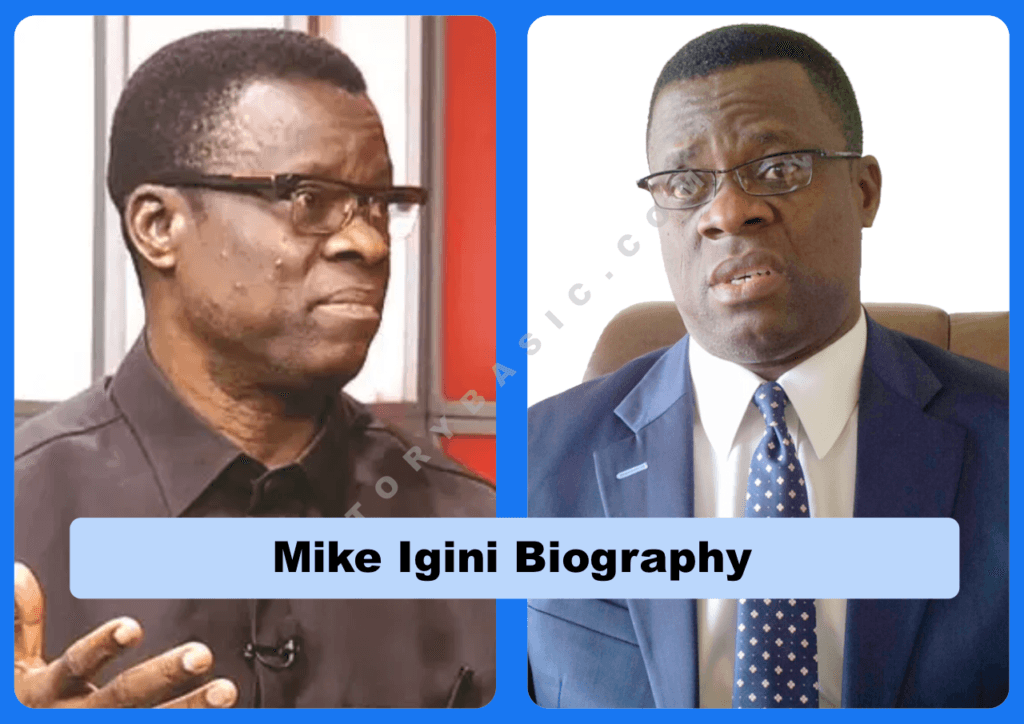
Mike Igini hails from Delta State in Nigeria’s South-South geopolitical zone. He received his university education at the prestigious University of Benin, where he studied Law. His time on campus became a formative period that shaped his lifelong commitment to justice, accountability, and democratic ideals. During his university years, Igini was deeply involved in student unionism. He served as President of the Students Union at the University of Benin, a position that exposed him to grassroots advocacy and the complexities of representing diverse interests. This early leadership experience would prove invaluable in his later career. The student union movement in Nigeria during Igini’s era was synonymous with pro-democracy activism. Students fought against military dictatorship and advocated for the restoration of civilian rule. Igini’s participation in these struggles earned him recognition as a “Hero of the June 12 Struggle,” referring to Nigeria’s annulled 1993 presidential election that many consider the freest and fairest in the country’s history.
Legal Career and Civil Society Engagement
Before joining the Independent National Electoral Commission, Igini practiced as a legal practitioner. His law practice exposed him to the intricacies of Nigeria’s legal system and the challenges ordinary citizens face in seeking justice. This experience deepened his understanding of how legal frameworks impact everyday life. Beyond private legal practice, Igini was actively involved in civil society engagements. He participated in pro-democracy advocacy groups and contributed to public affairs commentary through various platforms. His consistent theme was the need for accountability in governance and the protection of citizens’ rights. His exposure to governance and legal processes positioned him well for public service. Colleagues from this period describe him as someone with unwavering principles who refused to compromise on matters of integrity. This reputation would follow him throughout his career and define his tenure at INEC.
Appointment to INEC
Mike Igini’s institutional role in Nigeria’s electoral system began with his appointment to the Independent National Electoral Commission as a Resident Electoral Commissioner. He was first appointed in June 2010 by President Goodluck Jonathan. After completing his first term, he was reappointed in 2017 by President Muhammadu Buhari. This reappointment across two different administrations suggested broad confidence in his capabilities. However, Igini later revealed that his principled stance put him at odds with political interests on both sides of the political divide. He noted that PDP members pressured President Jonathan to sack him during his first tenure. As a Resident Electoral Commissioner, Igini served in multiple states over his decade-long career. His postings included Cross River State, Edo State, and notably Akwa Ibom State, where he spent his final five years. He also undertook intervention missions in Anambra and Imo states for crucial gubernatorial elections.
Service in Edo State
Igini’s tenure in Edo State proved pivotal in establishing his national reputation. He presided over the contentious 2016 gubernatorial election that saw power transfer from the ruling Peoples Democratic Party to the All Progressives Congress. This election was watched closely across Nigeria as a test of INEC’s independence. His insistence on following the Electoral Act to the letter, regardless of political pressure, became evident during this period. He refused to overlook irregularities even when they favored powerful politicians. This stance brought him into direct confrontation with entrenched political interests who were accustomed to electoral commissioners looking the other way. The Edo election established a pattern that would define Igini’s career: strict compliance with the law, transparency in processes, and zero tolerance for electoral malpractices. Politicians who expected business as usual found themselves frustrated by a commissioner who took his oath of office seriously.
Tenure in Akwa Ibom State
Igini’s most impactful and controversial period came during his five years as Resident Electoral Commissioner for Akwa Ibom State, from 2017 to 2022. He arrived in a state where electoral processes had historically favored the incumbent party. Opposition parties in Akwa Ibom had long complained of systemic disenfranchisement. His approach immediately signaled change. He insisted that all political parties, including opposition parties, had equal access to INEC offices and officials. The chairman of the Inter-Party Advisory Committee later testified that Igini was the first REC in Akwa Ibom to give opposition parties genuine opportunity to participate in the electoral process. Igini monitored political party primaries with unprecedented scrutiny, ensuring only candidates who emerged through proper procedures received INEC recognition. His strict interpretation of party nomination guidelines led to several high-profile confrontations. Most notably, he declared Udom Ekpoudom as the rightful APC senatorial candidate for Akwa Ibom North-West, contradicting claims by former minister Godswill Akpabio. Under his watch, INEC in Akwa Ibom State won 35 out of 35 legal cases instituted against the commission in 2019, a 99% victory rate that demonstrated the legal soundness of his decisions. He built what he called an “electoral firewall” in the state to ensure credible processes were maintained beyond his tenure.
Advocacy for Electoral Technology
Throughout his INEC career, Igini became a passionate advocate for electoral technology innovations. He championed the Bimodal Voter Accreditation System and the electronic transmission of results from polling units. Before retirement, he conducted weekly civic education sessions explaining these innovations to Nigerians. He emphasized that the Electoral Act 2022 represented Nigeria’s most progressive electoral legislation. The law mandated the use of BVAS technology and direct upload of polling unit results to INEC’s Results Viewing Portal. Igini promoted these reforms believing they would eliminate result manipulation at collation centers. His advocacy extended beyond INEC. He appeared on television programs, gave interviews, and spoke at conferences about the importance of technology in securing electoral credibility. He stressed that while technology was crucial, human implementation remained the determining factor in whether reforms succeeded or failed.
Retirement and Post-INEC Reflections
Mike Igini retired from INEC in August 2022 after completing his second term. His valedictory session in Uyo, Akwa Ibom State, drew tributes from across the political spectrum. Even opposition politicians who had clashed with him acknowledged his integrity and commitment to fair play. At the event, Igini quoted the biblical verse: “I have fought a good fight, I have finished the race, I have kept the faith.” He tasked stakeholders to uphold the rule of law, warning that democracy could not survive in the soil of absolutism. He urged INEC career staff to maintain the trajectory of credible elections. However, his post-retirement statements revealed deep disillusionment. In February 2026, during an interview on Arise News, Igini made the shocking declaration that he regretted spending ten years with INEC. He described his efforts as ultimately wasted in the face of systemic challenges.
“I Regret My 10 Years in INEC”
Igini’s February 2026 interview sent shockwaves through Nigeria’s political establishment. He stated: “I spent over 30 years of my life, including 10 practical years in INEC, working to remove the history of our elections from the realm of frustration and pain, so we can give meaning and purpose to the ballot as the best means of expressing the will of the people in a democracy. To now find out that all that we did was in vain, that’s why I regret that I wasted my 10 years in service of the fatherland.” He highlighted the longstanding resistance to fair elections and the personal risks involved. Igini recalled that a colleague in Kano was murdered for attempting to “do the right thing” during elections. He added that he could have been killed for his principled stance, making his survival seem almost accidental. Igini decried what he called the “level of hypocrisy” among those involved in Nigeria’s elections. He criticized the fact that many public figures speak eloquently about democracy but actively undermine it when elections approach. His regret stemmed from realizing that systemic forces remained stronger than individual integrity.
Criticism of 2026 Electoral Act
In March 2026, Igini intensified his public advocacy by describing the Electoral Act 2026 as the worst in Nigeria’s history. Speaking at the second annual lecture of the National Institute for Security Studies Alumni Association, he called the law a “tragedy” that must be urgently corrected before the 2027 general elections. He argued that the 2022 Electoral Act had been Nigeria’s most progressive electoral legislation but that the 2026 amendments had watered down its critical provisions. Igini warned that unless the issues were addressed, Nigerians might be denied the ability to freely determine their leaders. He stressed that credible elections depend on three key institutions functioning effectively: INEC, the judiciary, and security agencies. Each must have clearly defined roles and proper coordination. Igini emphasized that the legal framework governing elections played a decisive role in shaping public confidence.
Views on INEC Partisanship Allegations
As recently as April 2026, Igini continued engaging with electoral issues. When allegations emerged that INEC’s chairman was linked to a partisan social media account supporting the APC during the 2023 elections, Igini called the situation “very regrettable and most unfortunate.” He urged INEC leadership to urgently clear doubts over alleged partisanship to restore public trust. Igini stressed that perception management is critical for electoral management bodies. He said: “It’s expected that all actions and inactions of an electoral body should reflect neutrality and transparency.” He also expressed concern about the expanding role of courts in determining electoral outcomes. Igini warned that winners should be determined at polling units, not in courtrooms. The increasing judicial intervention, he argued, undermined democratic processes and suggested failures at earlier stages.
Assessment of 2023 Elections
In a candid April 2023 interview with Vanguard News, Igini reflected on the 2023 general elections that occurred after his retirement. He admitted being “still in shock over the level of deviation from established laws, guidelines, and procedures” during the polls. Despite having promoted the BVAS technology and electronic result transmission, Igini acknowledged that implementation failures undermined the reforms he had championed. He clarified that the technology itself did not fail but rather the human beings responsible for implementing it failed Nigerians. He cited examples of INEC officials who unlawfully refused to upload results from polling units despite clear legal requirements. Igini emphasized that good laws and innovations are not self-executory—they require human compliance. He described this as proof that the devil is truly in the implementation.
Legacy and Impact
Mike Igini’s career represents both the promise and the tragedy of institutional reform in Nigeria. His tenure demonstrated that credible elections are achievable when officials prioritize integrity over political pressure. States where he served witnessed marked improvements in electoral transparency. His influence extended beyond direct supervision. The “Igini template”—strict adherence to law, equal treatment of all parties, and use of technology—became a benchmark for measuring other electoral commissioners. Many Nigerians view him as proof that the system can work if staffed with principled individuals. However, his post-retirement disillusionment highlights systemic barriers to lasting reform. Despite individual efforts, corrupt politicians, compromised security forces, and judicial manipulation continue undermining electoral credibility. Igini’s legacy thus poses a question: Is individual integrity enough, or do deeper structural changes remain necessary?
Final Thoughts
Mike Igini’s journey from student activist to electoral commissioner embodies Nigeria’s ongoing struggle for genuine democracy. His unwavering commitment to credible elections earned him both admiration and powerful enemies. In a system where compromise is the norm, Igini’s refusal to bend made him exceptional. His public expressions of regret over his INEC years have provoked soul-searching among democracy advocates. If someone of Igini’s integrity feels his decade of service was wasted, what does this say about Nigeria’s democratic project? Yet his very disillusionment stems from having fought for something better—proof that the vision of credible elections remains alive. At a time when many Nigerians have resigned themselves to electoral fraud as inevitable, Mike Igini stands as a reminder that alternatives exist. His career shows that individual officials can make a difference, even if systemic change requires more than individual virtue. Whether his legacy will be one of missed opportunity or a foundation for future reforms remains to be seen.
 Husband & Net Worth" loading="lazy" width="180" height="120">
Frequently Asked Questions
Q1: Who is Mike Igini?
Mike Igini is a Nigerian lawyer and former Resident Electoral Commissioner with the Independent National Electoral Commission. He is known for his unwavering commitment to electoral integrity and his zero-tolerance approach to electoral malpractices during his service from 2010 to 2022.
Q2: Which states did Mike Igini serve in?
Mike Igini served as Resident Electoral Commissioner in Cross River State, Edo State, and Akwa Ibom State. He also undertook intervention missions in Anambra and Imo states for gubernatorial elections. He spent his final five years in Akwa Ibom before retiring in 2022.
Q3: Why does Mike Igini regret his INEC service?
In February 2026, Igini stated he regrets his 10 years with INEC because his efforts to establish credible elections proved futile against systemic resistance. He cited the murder of a colleague for trying to do the right thing and noted the persistent hypocrisy of political actors.
 Worth & Career" loading="lazy" width="180" height="120">
Q4: What is Mike Igini’s educational background?
Mike Igini studied Law at the University of Benin, where he was actively involved in student unionism and served as President of the Students Union. His campus activism during the struggle for democracy in Nigeria earned him recognition as a “Hero of the June 12 Struggle.”
Q5: What is the 2026 Electoral Act controversy?
In March 2026, Mike Igini described the Electoral Act 2026 as the worst in Nigeria’s history and a “tragedy.” He argued it watered down the progressive provisions of the 2022 Electoral Act and warned it could undermine credible elections in 2027 if not corrected.
Q6: What electoral innovations did Mike Igini advocate?
Igini championed the Bimodal Voter Accreditation System and electronic transmission of results from polling units to INEC’s Results Viewing Portal. He believed these technologies could eliminate result manipulation at collation centers and ensure credible elections.
Q7: What is Mike Igini doing now?
Since retiring from INEC in August 2022, Mike Igini has remained active as a public commentator on electoral reforms and governance issues. He frequently appears on television programs and speaks at conferences advocating for credible electoral processes in Nigeria.