Helen Keller: Biography: Teacher & Achievements
Helen Keller (1880-1968) overcame deafness and blindness to become an author, activist, and humanitarian. Learn about Anne Sullivan, her achievements, and legacy.
- Quick Facts About Helen Keller
- Early Life in Alabama
- Childhood Isolation
- Anne Sullivan’s Arrival
- The Famous Breakthrough
- College Education
- Writing Career
- Social Activism
- Global Humanitarian Work
- Personal Life
- Recognition and Honors
- Cultural Legacy
- Death and Legacy
- Wrapping Up
- Frequently Asked Questions
Helen Adams Keller stands as one of history’s most inspiring figures, proving that physical limitations cannot define human potential. Born in 1880, she lost both sight and hearing at 19 months old yet became the first deafblind person to earn a Bachelor of Arts degree. Her remarkable journey with teacher Anne Sullivan transformed perceptions of disability worldwide. Keller’s life extended far beyond her famous water pump breakthrough moment. She authored 14 books, delivered countless lectures, co-founded the ACLU, and championed causes from women’s suffrage to labor rights. Her 87-year life demonstrated extraordinary courage, intelligence, and determination that continues inspiring millions today.
Quick Facts About Helen Keller
| Detail | Information |
|---|---|
| Full Name | Helen Adams Keller |
| Date of Birth | June 27, 1880 |
| Date of Death | June 1, 1968 (age 87) |
| Birthplace | Tuscumbia, Alabama, USA |
| Profession | Author, Activist, Lecturer, Humanitarian |
| Education | Radcliffe College (BA, 1904) |
| Famous Teacher | Anne Sullivan |
| Books Written | 14 books, 400+ essays |
| Famous For | First deafblind person to earn college degree |
| Major Achievement | Presidential Medal of Freedom (1964) |
Early Life in Alabama
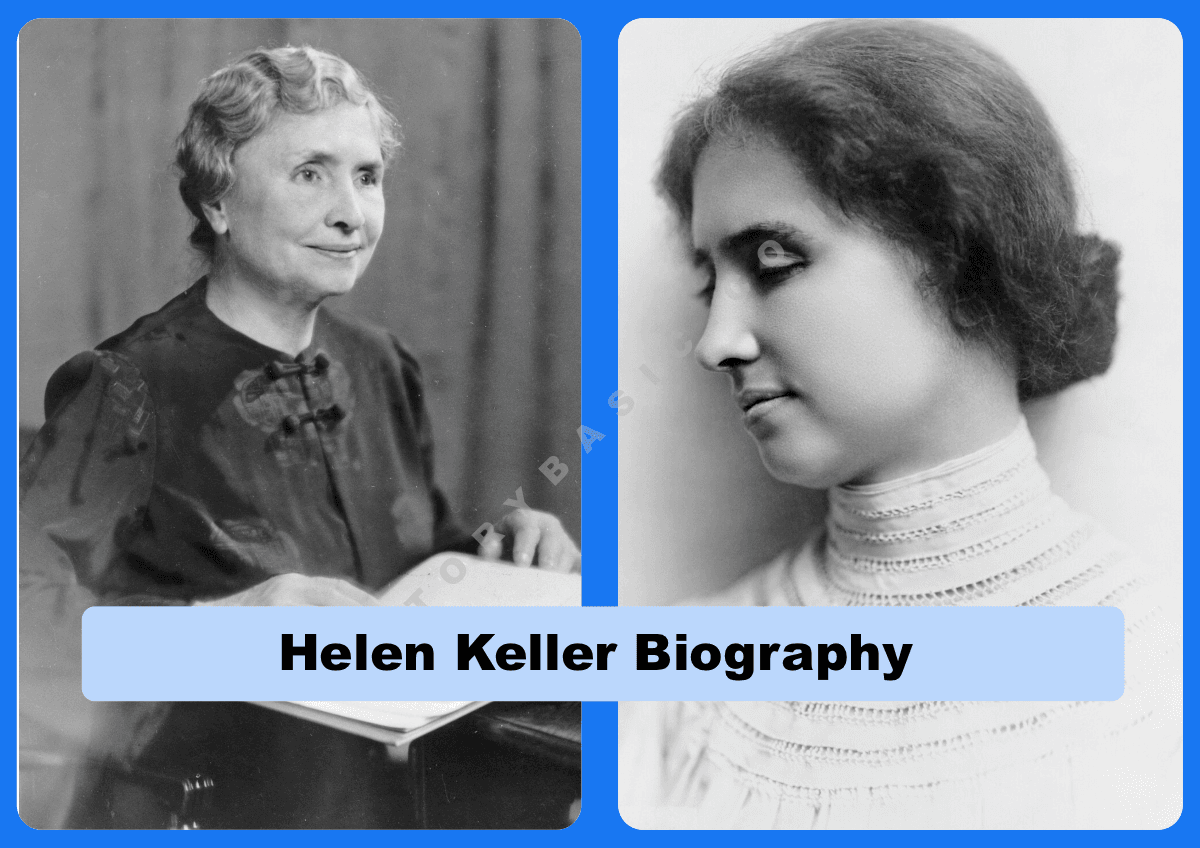
Helen Adams Keller was born healthy on June 27, 1880, in Tuscumbia, Alabama. Her father, Arthur H. Keller, was a Confederate Army captain turned newspaper editor, while her mother Kate came from an educated Memphis family. At 19 months old, Helen contracted an illness that doctors believed was scarlet fever or meningitis. The illness left her completely deaf and blind, transforming her world into darkness and silence.
Childhood Isolation
Without sight or hearing, young Helen became frustrated and unruly. She developed about 60 rudimentary signs to communicate with Martha Washington, the cook’s daughter, but these couldn’t express her complex thoughts. Helen’s violent temper tantrums worried her family. In 1886, the Kellers consulted Alexander Graham Bell in Washington, D.C., who referred them to the Perkins Institution for the Blind.
Anne Sullivan’s Arrival
On March 3, 1887, twenty-year-old Anne Sullivan arrived to become Helen’s teacher. Keller later called this her “soul’s birthday.” Sullivan, partially blind herself, had overcome her own challenges and understood Helen’s frustration. The relationship started violently—Helen hit, pinched, and kicked Sullivan. Through patience and consistency, Sullivan gradually won the child’s trust and began teaching by spelling words into Helen’s palm.
The Famous Breakthrough
One month later, Helen experienced her famous water pump breakthrough. While Sullivan pumped cool water over one hand, she spelled “w-a-t-e-r” into Helen’s other palm. Suddenly, Helen understood that finger motions symbolized objects. This revelation transformed everything. Helen frantically touched objects, demanding their names, learning dozens of words that day. Sullivan taught her to read Braille and write using a typewriter. Their partnership would last 49 years until Sullivan’s death in 1936.
College Education
Helen’s determination led her toward higher education. After attending preparatory schools, she entered Radcliffe College in 1900. Sullivan attended every class, signing lectures into Helen’s hand. On June 28, 1904, Helen graduated cum laude with a Bachelor of Arts degree, becoming the first deafblind person in U.S. history to achieve this milestone. Her accomplishment made international headlines.
Writing Career
During college, Helen published her autobiography “The Story of My Life” (1903) at age 23. The book became an international bestseller. She wrote 14 books total and over 475 speeches and essays on topics from faith to fascism. Helen used a Braille typewriter for manuscripts, then copied them on a regular typewriter. Her passport listed her profession as “author,” and she communicated her ideas to millions worldwide through writing.
Social Activism
Keller’s activism extended beyond disability rights. She joined the Socialist Party in 1909 and campaigned for women’s suffrage, labor rights, and pacifism. In 1920, she co-founded the American Civil Liberties Union with Jane Addams and others. Helen testified before Congress advocating for blind welfare. In 1915, she co-founded Helen Keller International to combat blindness and malnutrition globally. When the American Foundation for the Blind formed in 1924, she became a tireless fundraiser.
 Wife, Books & Net Worth" loading="lazy" width="180" height="120">
Global Humanitarian Work
After Sullivan’s death in 1936, Helen continued her mission with aide Polly Thomson. Between 1946 and 1957, she toured over 35 countries as a Goodwill Ambassador for disabled people, inspiring governments to establish schools for blind and deaf students. During World War II, Helen toured military hospitals, bringing comfort to blinded soldiers. Her compassion helped countless veterans adjust to disabilities, showing them meaningful lives remained possible.
Personal Life
Helen lived with Anne Sullivan and Sullivan’s husband John Macy after their 1905 marriage. She never married, though she fell in love with Peter Fagan in 1916. Her family’s objections prevented their planned elopement. Mark Twain called Helen and Napoleon “the two most interesting characters of the 19th century.” Both Twain and Alexander Graham Bell defended her when critics accused her of plagiarism at age eleven.
Recognition and Honors
In 1964, President Lyndon B. Johnson awarded Helen the Presidential Medal of Freedom, America’s highest civilian honor. In 1999, Gallup listed her fifth in Most Widely Admired People of the 20th Century, and Time named her one of the 100 Most Important People of the 20th Century. Alabama honored her on its 2003 state quarter, the only U.S. coin featuring Braille. Her birthplace, Ivy Green, became a National Historic Landmark operating as a museum.
Cultural Legacy
William Gibson’s play “The Miracle Worker” (1959) and its 1962 film adaptation dramatized Helen’s early years with Sullivan. Both productions focused on the water pump breakthrough, introducing Helen’s story to new generations worldwide.
Death and Legacy
Helen stopped public appearances in 1961 after suffering strokes. She died peacefully on June 1, 1968, at age 87 in Westport, Connecticut. Her funeral at Washington’s National Cathedral drew over 1,200 attendees. She is interred in the Cathedral’s Chapel of St. Joseph of Arimathea alongside Anne Sullivan. A bronze plaque in both print and Braille marks their final resting place.
Wrapping Up
Helen Keller’s journey from isolated child to internationally respected humanitarian remains one of history’s most remarkable stories. She proved that disabilities need not limit human potential or prevent meaningful contributions to society. Her partnership with Anne Sullivan demonstrated the transformative power of dedicated teaching. Helen’s legacy extends beyond disability rights to social justice, women’s rights, and international humanitarianism, continuing to inspire people worldwide more than 50 years after her death.
Frequently Asked Questions
Q1: When was Helen Keller born and when did she die?
Helen Keller was born on June 27, 1880, in Tuscumbia, Alabama. She died on June 1, 1968, in Westport, Connecticut, at age 87. She lived a full life spanning nearly nine decades of extraordinary achievement.
Q2: How did Helen Keller become deaf and blind?
At 19 months old, Helen contracted an illness that doctors called “acute congestion of the stomach and brain.” Modern experts believe it was scarlet fever or meningitis. The illness left her completely deaf and blind.
Q3: Who was Anne Sullivan and how did she help Helen Keller?
Anne Sullivan was Helen’s teacher who arrived in 1887 when Helen was six years old. Sullivan taught Helen to communicate by spelling words into her palm, leading to the famous water pump breakthrough. Their partnership lasted 49 years until Sullivan’s death in 1936.
 Worth" loading="lazy" width="180" height="120">
Q4: What was Helen Keller’s education?
Helen Keller graduated cum laude from Radcliffe College in 1904 with a Bachelor of Arts degree. She became the first deafblind person in the United States to earn a college degree. She attended several preparatory schools before Radcliffe.
Q5: How many books did Helen Keller write?
Helen Keller wrote 14 books and over 475 speeches and essays. Her most famous work is her autobiography “The Story of My Life” (1903). She also wrote about optimism, religion, socialism, and her experiences as a deafblind person.
Q6: What causes did Helen Keller support?
Helen Keller advocated for disability rights, women’s suffrage, labor rights, pacifism, and socialism. She co-founded the ACLU in 1920 and Helen Keller International in 1915. She testified before Congress and toured globally on behalf of blind and disabled people.
Q7: Did Helen Keller receive any major awards?
Yes, Helen received the Presidential Medal of Freedom in 1964 from President Lyndon B. Johnson. She was named one of Time magazine’s 100 Most Important People of the 20th Century and ranked fifth in Gallup’s Most Widely Admired People of the 20th Century.