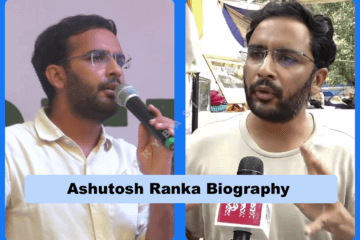
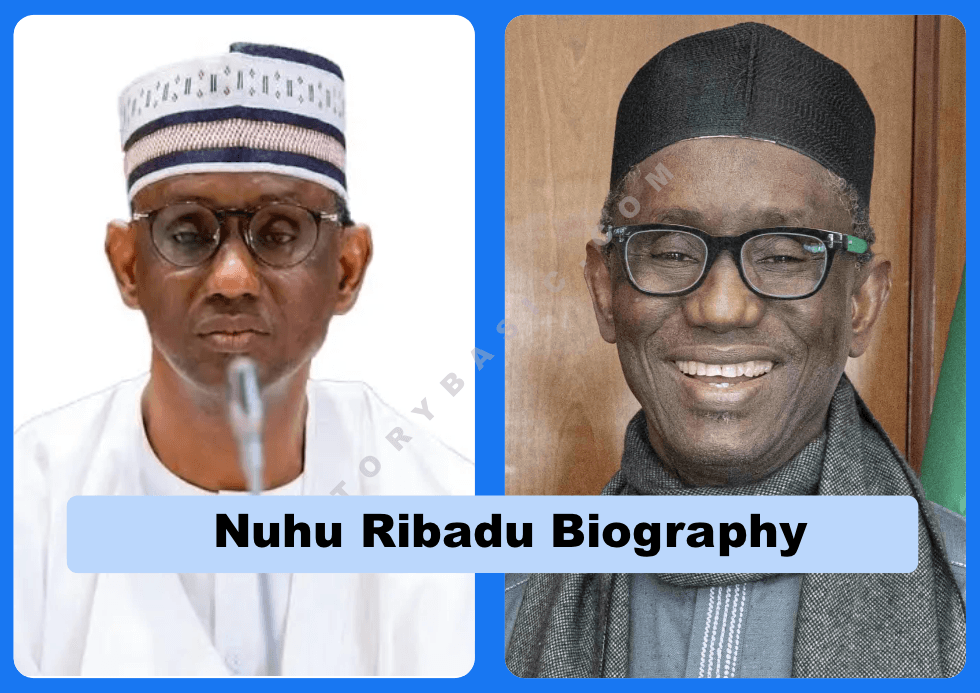
Nuhu Ribadu Biography: Age, NSA, Political Career
Nuhu Ribadu is Nigeria’s National Security Adviser, born November 21, 1960. Former EFCC chairman who fought corruption. Read his complete biography here.
- Quick Facts About Nuhu Ribadu
- Early Life and Family Background
- Educational Journey
- Joining the Nigeria Police Force
- Pioneer Chairman of EFCC
- Bribery Attempts and Assassination Threats
- Political Persecution and Exile
- Return to Nigeria and Political Career
- National Security Adviser Appointment
- Security Achievements Under Ribadu
- Personal Life and Family
- Awards and International Recognition
- Controversies and Criticism
- Net Worth and Financial Status
- Legacy and Impact on Nigerian Governance
- Final Thoughts
- Frequently Asked Questions
Mallam Nuhu Ribadu mni is one of Nigeria’s most recognizable anti-corruption crusaders and current National Security Adviser. Born on November 21, 1960, in Yola, Adamawa State, he is a retired police officer, barrister, and politician who has shaped Nigeria’s fight against corruption and insecurity. His fearless leadership as the pioneer chairman of the Economic and Financial Crimes Commission between 2003 and 2007 earned him national and international acclaim.
The 65-year-old security chief currently serves under President Bola Tinubu, appointed to the position in June 2023. His journey from a prosecutor to Nigeria’s corruption fighter and now the nation’s chief security strategist demonstrates his commitment to public service. He survived assassination attempts, political persecution, and forced exile, yet returned to continue serving his country.
Quick Facts About Nuhu Ribadu
| Detail | Information |
|---|---|
| Full Name | Mallam Nuhu Ribadu mni |
| Date of Birth | November 21, 1960 |
| Age | 65 years (as of 2026) |
| Birthplace | Yola, Adamawa State, Nigeria |
| Profession | Lawyer, Politician, Retired Police Officer |
| Current Position | National Security Adviser |
| Spouse | Zara Ribadu |
| Children | Five (Sadiq, Mahmoud, Fatima, Ahmad, Tahir) |
| Education | Ahmadu Bello University (LLB, LLM), Nigerian Law School |
| Famous For | Pioneer EFCC Chairman, Anti-Corruption Crusader |
Early Life and Family Background
Nuhu Ribadu was born into a politically connected family in Yola, Adamawa State. His father, Ahmadu Ribadu, served as a First Republic Member of Parliament and later as Nigeria’s Ambassador to Niger during the military regime of Muhammadu Buhari. This political heritage exposed young Nuhu to public service from an early age.
Growing up in Yola, Ribadu witnessed firsthand the importance of integrity and service to the nation. His family’s values shaped his worldview and instilled in him a strong sense of justice. These formative experiences would later define his approach to fighting corruption and maintaining national security.
His upbringing in northern Nigeria during a politically turbulent period gave him unique insights into governance challenges. The combination of his father’s diplomatic career and his own observations prepared him for the complex roles he would assume in adulthood.
Educational Journey
Ribadu attended Aliyu Mustapha Primary School in Yola from 1966 to 1973, then proceeded to Yelwa Government Secondary School from 1973 to 1977. After secondary school, he enrolled at the College of Preliminary Studies in Yola between 1978 and 1980 for his A-level studies.
In 1980, he gained admission to Ahmadu Bello University in Zaria to study law, graduating in 1983 with a Bachelor of Laws degree. He then attended the Nigerian Law School and was called to the Nigerian Bar in 1984. His legal training would prove instrumental throughout his career in law enforcement and prosecution.
Ribadu later pursued a Master of Laws degree from Ahmadu Bello University, deepening his expertise in legal matters. He also attended Harvard Business School for a program in strategic management of law enforcement. These advanced qualifications equipped him with both theoretical knowledge and practical skills for his future roles.
Joining the Nigeria Police Force
After being called to the bar in 1984, Ribadu immediately joined the Nigeria Police Force. He rose through the ranks, working primarily in the Legal and Prosecution Department. His legal background made him invaluable in prosecuting complex criminal cases.
Between 1985 and 2003, he worked as a government prosecutor, handling numerous cases involving advanced fee fraud, banking fraud, and other economic crimes. His exceptional performance earned him Inspector General of Police Awards in 1997, 1998, and 2000. These accolades recognized his dedication and effectiveness in bringing criminals to justice.
His promotion to Assistant Inspector General of Police in April 2007 was later challenged as illegal and unconstitutional. Despite controversies surrounding his rapid rise, his capabilities as a prosecutor and investigator were undeniable. He had built a reputation for thoroughness and incorruptibility.
Pioneer Chairman of EFCC
President Olusegun Obasanjo appointed Ribadu as the pioneer chairman of the Economic and Financial Crimes Commission in 2003. This appointment marked the beginning of Nigeria’s most aggressive anti-corruption campaign. Ribadu was given unprecedented powers and reported directly to the president, bypassing bureaucratic obstacles.
Under his administration, the EFCC issued thousands of indictments and achieved about 270 convictions. He fearlessly went after prominent bankers, former state governors, ministers, senators, and high-ranking political party members. Even the Inspector General of Police was not spared from prosecution.
One of his most notable cases involved his own boss, Inspector General Tafa Balogun. Balogun was convicted, jailed, and made to return £150 million under a plea bargain. This prosecution sent shockwaves through Nigeria’s power circles, demonstrating that no one was above the law.
In October 2006, Ribadu told the BBC that over $380 billion had been stolen or wasted by Nigerian governments since independence in 1960. This staggering figure became a reference point for discussions about corruption in Africa’s largest democracy. His candor about the scale of the problem resonated both domestically and internationally.
Bribery Attempts and Assassination Threats
During his tenure at EFCC, Ribadu faced numerous attempts to compromise his integrity. A state governor offered him $15 million and a house abroad to pervert the course of justice. In a controversial move, Ribadu claimed he accepted the money and used it as evidence to prosecute the governor, though this claim was later disputed.
He escaped two assassination attempts before fleeing to the United Kingdom in early 2009. The threats against his life were real and persistent. His unwavering commitment to fighting corruption made him enemies among Nigeria’s wealthiest and most powerful citizens.
These experiences tested his resolve but also cemented his reputation as a man of principle. Many Nigerians viewed him as a hero willing to sacrifice personal safety for national good. International observers lauded his courage in confronting entrenched corruption.

Political Persecution and Exile
In December 2007, Inspector-General of Police Mike Okiro ordered Ribadu removed from the EFCC chairmanship and sent to attend a mandatory one-year course at the National Institute of Policy and Strategic Studies. Critics, including Nobel Laureate Wole Soyinka, condemned the decision as politically motivated.
The removal followed tension with the newly-elected President Umaru Yar’Adua’s administration, particularly after the conviction of James Ibori, an influential associate of the president. On December 22, 2008, Ribadu was dismissed from the Nigerian Police force by the Police Service Commission.
He left Nigeria and assumed a fellowship at the Center for Global Development in Washington D.C. in April 2009. Living in exile until 2010, he used this period to reflect and engage with international policy experts. His forced departure was seen as a setback for Nigeria’s anti-corruption efforts.
Return to Nigeria and Political Career
Ribadu returned to Nigeria in 2010 and declared his intention to run for President under the Action Congress of Nigeria platform. He officially became the party’s presidential candidate on January 14, 2011. His campaign emphasized transparency, anti-corruption, and economic development.
The merger talks between ACN and the Congress for Progressive Change collapsed due to Ribadu’s refusal to step down for Muhammadu Buhari. He eventually finished third in the 2011 presidential election, behind winner Goodluck Jonathan and Buhari.
After the election, he joined a six-man UN monitoring team tasked with auditing Afghanistan’s governance, working to reduce corruption in one of the world’s most corrupt countries. The Jonathan administration also asked him to chair the Petroleum Special Revenue Task Force from 2012 to 2014, improving accountability in Nigeria’s oil and gas sector.
In August 2014, he defected to the ruling PDP to run for Governor of Adamawa State. He later joined the APC and contested the governorship in 2019 and 2023, losing both attempts. Throughout these political ventures, he maintained close ties with Bola Tinubu.
National Security Adviser Appointment
President Bola Tinubu appointed Ribadu as National Security Adviser on June 19, 2023. This appointment marked his return to federal government after years in the political wilderness. Unlike previous NSAs who came from military backgrounds, Ribadu brought law enforcement and anti-corruption expertise to the role.
The appointment received mixed reactions, with critics questioning his integrity after years of partisan politics and association with elites he had previously prosecuted. However, supporters saw it as a strategic move to bring intelligence-led security operations to Nigeria’s fight against insecurity.
In his new role, Ribadu oversees Nigeria’s domestic and international security needs, supervises military chiefs, and reports directly to the president. He inherited complex security challenges including Boko Haram insurgency, banditry in the Northwest, secessionist agitation in the Southeast, and oil theft in the Niger Delta.
Security Achievements Under Ribadu
Since assuming office, Ribadu has prioritized intelligence-led operations, community engagement, cybersecurity, and interagency collaboration over traditional military force alone. His approach represents a significant shift in Nigeria’s security strategy.
According to official reports, over 13,543 Boko Haram terrorists have been neutralized and more than 11,000 weapons recovered since 2023, with 124,408 fighters and their families surrendering to Nigerian troops. These statistics suggest progress in degrading terrorist capabilities.
Notable bandit leaders like Kachalla Ali Kawaje, Kachalla Halilu Sububu, and Kachalla Damina have been neutralized under his watch. The frequency of mass abductions and large-scale terrorist attacks has reportedly decreased significantly.
The Office of the National Security Adviser under Ribadu now operates a national security grid that enhances preventive security enforcement capabilities. Technology and data-driven strategies have become central to Nigeria’s security architecture.
Personal Life and Family
Nuhu Ribadu is married to Zara Ribadu, and they have five children: Sadiq, Mahmoud, Fatima, Ahmad, and Tahir. His family has remained largely out of the public eye, though they have supported him through the various challenges of his career.
In October 2020, his daughter Fatima married Aliyu Atiku, the son of former Vice President Atiku Abubakar. This union linked two prominent northern Nigerian political families, generating significant media attention.
Ribadu is known for his soft-spoken demeanor and regal bearing. Despite his fearsome reputation as an anti-corruption fighter, those who know him describe him as thoughtful and measured. He maintains a low-key lifestyle compared to many Nigerian politicians.
His faith plays an important role in his life and decision-making. He has often cited Islamic principles of justice and accountability as guiding his work. His integrity, though questioned by critics in recent years, remains a defining aspect of his public persona.
Awards and International Recognition
Ribadu has received numerous accolades for his anti-corruption work. In 2005, he received the Special Commendation of the President for successfully prosecuting advanced fee fraud and economic crime cases. The Accountant General of the Federation also specially commended his work.
In June 2010, Babcock University awarded him a Doctor of Laws degree in recognition of his resolute courage and fierce stance against corruption. The honor acknowledged his sacrifices in fighting corruption despite facing disgrace and death threats.
In 2008, the World Bank presented him with the Jit Gill Memorial Award for Outstanding Public Service, recognizing his leadership of the EFCC. He also received a Lifetime Achievement Award in December 2018 from the Rule of Law and Anti-Corruption Centre in Doha, Qatar, for his contributions to the anti-corruption movement.
He holds the national honor of Member of the Order of the Niger (mni). He is also a TED Fellow and Senior Fellow at St. Anthony’s College, University of Oxford, demonstrating his continued engagement with global policy discussions.
Controversies and Criticism
Ribadu’s career has not been without controversy. Critics accused him of selective prosecution during his EFCC tenure, targeting President Obasanjo’s political enemies while protecting allies. Lawyer Festus Keyamo was among those who publicly questioned his impartiality.
His transition to partisan politics and association with politicians he once prosecuted or criticized has raised questions about his integrity. Auwal Rafsanjani of Transparency International Nigeria expressed doubt about whether he remains the same corruption fighter he was at EFCC.
His appointment as National Security Adviser under Tinubu, who faces corruption allegations himself, has been characterized by some observers as “window-dressing” for a kleptocratic regime. Critics argue he is being used to provide credibility to an administration with questionable anti-corruption credentials.
Despite these criticisms, Ribadu maintains that he is committed to serving Nigeria. His supporters argue that his willingness to work within the system, rather than remaining in permanent opposition, demonstrates pragmatism. The debate over his legacy continues.
Net Worth and Financial Status
Nuhu Ribadu has kept his personal finances private throughout his career. Various sources estimate his net worth at approximately $500,000, though this figure is unverified. His wealth is believed to come from his salaries in government service, legal practice, and speaking engagements.
Unlike many Nigerian politicians, Ribadu has not been publicly associated with ostentatious displays of wealth. He does not flaunt luxury cars, multiple mansions, or extravagant lifestyles. This restraint has helped maintain his image as someone genuinely committed to public service rather than personal enrichment.
His relative financial modesty stands in stark contrast to the billions of dollars he helped recover during his EFCC tenure. This contrast reinforces the perception among many Nigerians that he practices the integrity he preached as an anti-corruption crusader.
Legacy and Impact on Nigerian Governance
Nuhu Ribadu’s impact on Nigeria’s governance landscape cannot be overstated. He demonstrated that corruption could be challenged even in a system designed to protect powerful offenders. His EFCC tenure showed that high-ranking officials could be prosecuted and convicted.
The EFCC under Ribadu helped remove Nigeria from the FATF List of Non-Cooperative Countries and Territories and secured admission into the prestigious Egmont Group. These achievements improved Nigeria’s international reputation in financial governance circles.
He inspired a generation of young Nigerians to believe that change was possible. Many anti-corruption activists cite him as a role model who proved that one determined individual could make a difference. His courage in the face of threats set a standard for public service.
 Worth" loading="lazy" width="180" height="120">
However, his legacy is complex. The institutional gains made during his EFCC tenure largely unraveled after his departure, suggesting that personality-driven anti-corruption campaigns have limitations. The question remains whether he created sustainable systems or simply wielded personal authority effectively.
Final Thoughts
Nuhu Ribadu’s life story is one of courage, controversy, and complexity. From prosecutor to corruption fighter to security chief, he has worn many hats in service of Nigeria. His willingness to confront powerful interests earned him both admiration and enemies.
At 65, he faces perhaps his greatest challenge yet as National Security Adviser. Nigeria’s security situation remains precarious, with multiple insurgencies, banditry, and criminal networks threatening stability. His success or failure in this role will significantly shape his ultimate legacy.
Whether history remembers him as a principled crusader or a compromised politician may depend on his performance in these crucial years. What remains undeniable is his significant impact on Nigeria’s fight against corruption and his ongoing influence on the nation’s security architecture. His story continues to unfold.
Frequently Asked Questions
Q1: Who is Nuhu Ribadu?
Nuhu Ribadu is Nigeria’s current National Security Adviser, appointed by President Bola Tinubu in June 2023. He is a retired police officer, lawyer, and politician best known as the pioneer chairman of the Economic and Financial Crimes Commission from 2003 to 2007. During his EFCC tenure, he prosecuted high-profile corruption cases and secured about 270 convictions.
Q2: How old is Nuhu Ribadu?
Nuhu Ribadu is 65 years old as of 2026. He was born on November 21, 1960, in Yola, Adamawa State, Nigeria. He will turn 66 in November 2026.
Q3: What is Nuhu Ribadu’s educational background?
Ribadu attended Ahmadu Bello University, where he earned both a Bachelor of Laws degree in 1983 and a Master of Laws degree. He was called to the Nigerian Bar in 1984 after graduating from Nigerian Law School. He also attended Harvard Business School for strategic management training.
Q4: Is Nuhu Ribadu married?
Yes, Nuhu Ribadu is married to Zara Ribadu. They have five children together: Sadiq, Mahmoud, Fatima, Ahmad, and Tahir. In 2020, his daughter Fatima married Aliyu Atiku, the son of former Vice President Atiku Abubakar.
Q5: What were Nuhu Ribadu’s major achievements at EFCC?
During his EFCC chairmanship, Ribadu secured about 270 convictions from thousands of indictments. He prosecuted prominent governors, ministers, senators, and bankers, including Inspector General of Police Tafa Balogun who returned £150 million. He helped remove Nigeria from international lists of non-cooperative countries in financial crime matters.
Q6: Why was Nuhu Ribadu removed from EFCC?
Ribadu was removed from the EFCC chairmanship in December 2007 and dismissed from the police force in December 2008. The actions were widely viewed as politically motivated, occurring after he testified against James Ibori, an influential associate of then-President Umaru Yar’Adua. He went into exile until 2010.
Q7: What is Nuhu Ribadu’s current role?
Nuhu Ribadu currently serves as Nigeria’s National Security Adviser, a position he has held since June 2023. In this role, he oversees the country’s domestic and international security operations, supervises military chiefs, and coordinates responses to terrorism, banditry, and other security threats facing Nigeria.