Phil Ivey Biography: Age, Net Worth & WSOP Bracelets
Phil Ivey is a legendary poker player born February 1, 1977. With 11 WSOP bracelets and $100M+ net worth, he’s considered the GOAT. Read his complete biography.
- Quick Facts About Phil Ivey
- Early Life and Introduction to Poker
- The Atlantic City Years
- World Series of Poker Dominance
- The Historic 11th Bracelet
- Tournament Success Beyond the WSOP
- Cash Game Dominance
- The Edge-Sorting Controversies
- Personal Life and Philanthropy
- What Makes Him Great
- Legacy and Impact
- Final Thoughts
- Frequently Asked Questions
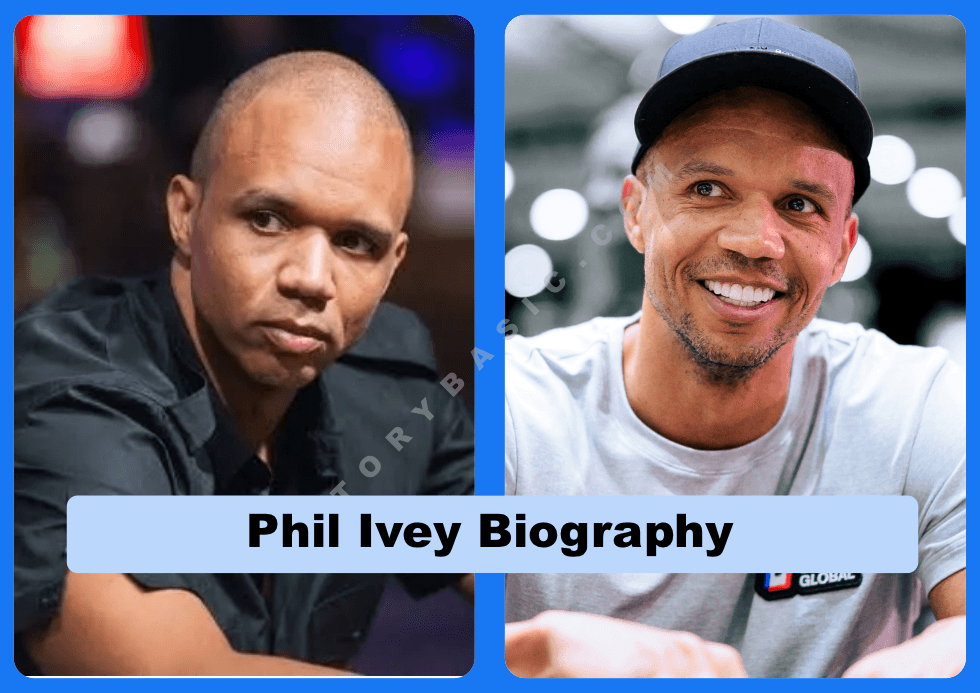
Phil Ivey is widely regarded as the greatest all-around poker player in the world. Born Phillip Dennis Ivey Jr. on February 1, 1977, in Riverside, California, he has dominated professional poker for over two decades. Known as “The Tiger Woods of Poker,” his mastery across all variants has made him a living legend. The 49-year-old poker icon has accumulated 11 World Series of Poker bracelets, placing him second on the all-time list behind only Phil Hellmuth. His estimated net worth exceeds $100 million, built through tournament victories, high-stakes cash games, and strategic investments.
Quick Facts About Phil Ivey
| Detail | Information |
|---|---|
| Full Name | Phillip Dennis Ivey Jr. |
| Date of Birth | February 1, 1977 |
| Age | 49 years (as of 2026) |
| Birthplace | Riverside, California, USA |
| Residence | Las Vegas, Nevada |
| Profession | Professional Poker Player |
| Net Worth | $100+ Million (approx.) |
| WSOP Bracelets | 11 |
| WPT Titles | 1 |
| Famous For | Being considered the greatest all-around poker player |
| Nickname | The Tiger Woods of Poker, No Home Jerome |
| Height | 6’2″ (188 cm) |
Early Life and Introduction to Poker
Phil Ivey moved to Roselle, New Jersey, at three months old and was raised there throughout his childhood. His grandfather, Leonard “Bud” Simmons, introduced him to five-card stud at age eight. What started as simple card games became a lifelong passion as young Phil demonstrated natural strategic abilities. During his teenage years at Old Bridge High School, Ivey’s poker interest intensified. While working a telemarketing job in New Brunswick, he began playing in Atlantic City casinos using a fake ID under the name “Jerome Graham.” Too young to gamble legally at 18, he took matters into his own hands to pursue his passion.
The Atlantic City Years
Ivey played so frequently at Atlantic City casinos that regulars nicknamed him “No Home Jerome” because he seemed to live there. He would often miss the last bus home and sleep under the boardwalk rather than leave the action. These grueling experiences became his education in professional poker. The losses came hard initially as veteran players exploited his inexperience. However, Ivey treated every loss as a lesson, studying opponents and refining his strategy. He learned patience, discipline, and psychological warfare—skills that would define his career.
World Series of Poker Dominance
Ivey’s first WSOP appearance in 2000 was historic. He won the $2,500 Pot-Limit Omaha event for $195,000 and his first bracelet, becoming the first player to defeat Amarillo Slim heads-up at a WSOP final table. At 23, he had announced himself as a force in professional poker. His breakthrough came in 2002 when he won three bracelets in a single series, tying the record for most tournament wins in one year. Between 2000 and 2014, Ivey accumulated ten bracelets, becoming the youngest player ever to reach that milestone at age 38. His victories spanned multiple variants including Pot-Limit Omaha, 2-7 Draw Lowball, and mixed games.
The Historic 11th Bracelet
After nearly a decade without WSOP gold, Ivey ended his drought at the 2024 WSOP. He captured his 11th bracelet in the $10,000 Limit 2-7 Triple Draw Championship, defeating Danny Wong after an intense four-day battle. The victory came when Ivey made a perfect wheel (7-5-4-3-2) to seal the championship. This win broke a four-way tie with Erik Seidel, Johnny Chan, and Doyle Brunson. Ivey now stands alone in second place on the all-time list, trailing only Phil Hellmuth’s 17 bracelets. The $347,440 prize pushed his total WSOP earnings past $12.4 million.
Tournament Success Beyond the WSOP
Ivey has appeared at nine World Poker Tour final tables, claiming his first WPT title in February 2008 at the LA Poker Classic. He defeated a star-studded field including Phil Hellmuth and Nam Le to win $1,596,100, ending a frustrating streak of seven WPT finals without victory. In November 2005, he won $1 million at the Monte Carlo Millions, then captured another $600,000 the next day at the FullTiltPoker.Net Invitational. His total recorded live tournament earnings exceed $54 million, ranking him 11th all-time. However, his cash game winnings likely surpass this figure significantly.
Cash Game Dominance
While tournaments brought fame, Ivey built his fortune in the world’s biggest cash games. He became a regular in the legendary “Big Game” at the Bellagio, where millions changed hands nightly. His fearless approach and unreadable demeanor made him the most feared player at the table. During poker’s online boom, Ivey dominated Full Tilt Poker’s highest stakes, reportedly profiting over $20 million—the most successful online cash game player in history. In 2006, he played for “The Corporation” against billionaire Andy Beal, contributing to a victory worth over $16 million. His appearances on “High Stakes Poker” and “Poker After Dark” captivated audiences worldwide. His cold stare became iconic—opponents knew that looking into Ivey’s eyes revealed nothing.

The Edge-Sorting Controversies
Ivey’s career includes controversial legal battles over edge-sorting at Crockfords Casino in London and the Borgata in Atlantic City. Edge-sorting involves identifying card manufacturing imperfections to determine face-down values. At Crockfords in 2012, Ivey won £7.7 million playing baccarat, but the casino refused payment. The UK Supreme Court ruled in 2014 that while Ivey didn’t technically cheat, he gained an unfair advantage. A similar situation at the Borgata resulted in courts ordering Ivey to return $9.6 million. In 2019, U.S. Marshals seized his WSOP winnings toward the judgment. The parties settled in July 2020. These cases sparked debate about advantage play versus cheating. Many professionals defended Ivey, while others felt his actions damaged poker’s integrity. The controversies cost him tens of millions in forfeited winnings.
Personal Life and Philanthropy
Phil Ivey married his high school sweetheart, Luciaetta, in May 2002 at the Little White Wedding Chapel in Las Vegas. After seven years of marriage, they divorced in December 2009. The settlement reportedly included valuable assets and significant monthly alimony. Ivey maintains strict privacy regarding his current relationship status and family life. Outside poker, Ivey enjoys sports betting, golf, and following the Lakers, Rockets, and Bills. He’s demonstrated generosity through philanthropy, donating $50,000 to Empowered 2 Excel in 2008. He founded the Budding Ivey Foundation, named after his grandfather, which supports children’s literacy and programs feeding the homeless.
What Makes Him Great
Ivey’s playing style combines technical mastery with psychological warfare. His unwavering stare studies opponents while projecting intimidation. His versatility across variants is unmatched—all 11 WSOP bracelets came in games other than No-Limit Hold’em, proving excellence in mixed games, Omaha, and draw variants. His hand-reading abilities border on supernatural. He processes bet sizing, timing tells, and patterns rapidly to construct accurate opponent ranges. Unlike aggressive players relying on constant pressure, Ivey employs selective aggression, waiting for optimal situations before attacking devastatingly. His fearlessness in high-pressure moments separates him from merely good players. Whether calling massive bluffs or making hero folds, Ivey trusts his reads completely. This confidence comes from decades of preparation and unshakeable self-belief.
Legacy and Impact
Ivey’s influence extends far beyond personal accomplishments. An entire generation studies his hands, emulates his demeanor, and aspires to his excellence. His success legitimized poker as a viable profession, demonstrating that skill generates generational wealth. His 2017 Poker Hall of Fame induction in his first year of eligibility reflected universal respect. At 40, he became one of the youngest inductees ever. The debate over poker’s GOAT inevitably centers on Ivey, with Daniel Negreanu repeatedly calling him the world’s best player.
Final Thoughts
Phil Ivey’s biography reads like poker mythology brought to life. From sleeping under Atlantic City boardwalks to commanding respect in the world’s biggest games, his journey exemplifies professional poker’s possibilities. His 11 WSOP bracelets, $100+ million net worth, and recognition as potentially the greatest player ever cement his legendary status. What distinguishes Ivey isn’t just his accomplishments but how he achieved them. His relentless dedication, fearless competition, and ability to excel across all formats created an unparalleled career. Even controversies couldn’t diminish his game impact. As of 2026, Ivey remains active in high-stakes tournaments while maintaining a more balanced life. He’s stated that poker no longer dominates his identity, valuing family and personal wellbeing more than chasing records. His legacy will shape poker long after he plays his final hand.
Frequently Asked Questions
Q1: Who is Phil Ivey?

Phil Ivey is an American professional poker player born February 1, 1977. He is widely considered the greatest all-around player in the world with 11 WSOP bracelets and over $54 million in tournament winnings.
Q2: How many WSOP bracelets does Phil Ivey have?
Phil Ivey has 11 World Series of Poker bracelets as of 2026. He won his 11th in June 2024, placing him second all-time behind Phil Hellmuth’s 17.
Q3: What is Phil Ivey’s net worth?
Phil Ivey’s estimated net worth is $100-125 million as of 2026. His wealth comes from tournaments, high-stakes cash games (over $20 million online), and investments.

Q4: Why is Phil Ivey called “No Home Jerome”?
Ivey used a fake ID with the name “Jerome Graham” to play in Atlantic City before turning 21. He played so frequently and slept under the boardwalk so often that regulars nicknamed him “No Home Jerome.”
Q5: What happened with Phil Ivey’s edge-sorting cases?
Ivey used edge-sorting at Crockfords London and Borgata Atlantic City, winning millions. Courts ruled he gained unfair advantages, requiring him to forfeit winnings. The cases settled in 2020.
Q6: Is Phil Ivey married?
Ivey was married to Luciaetta from 2002-2009. As of 2026, he keeps his personal life extremely private and his current relationship status is unknown.
Q7: What makes Phil Ivey such a great poker player?
Ivey’s greatness stems from versatility across all poker variants, exceptional hand-reading abilities, ice-cold demeanor under pressure, and fearless decision-making. His 11 bracelets all came in non-Hold’em games, proving complete mastery.