Safinatu Yusuf Biography: Nigeria’s First Lady 1983–1985
Discover the life of Safinatu Yusuf, Nigeria’s First Lady from 1983–1985 and first wife of Muhammadu Buhari. Learn about her education, family, divorce, and death.
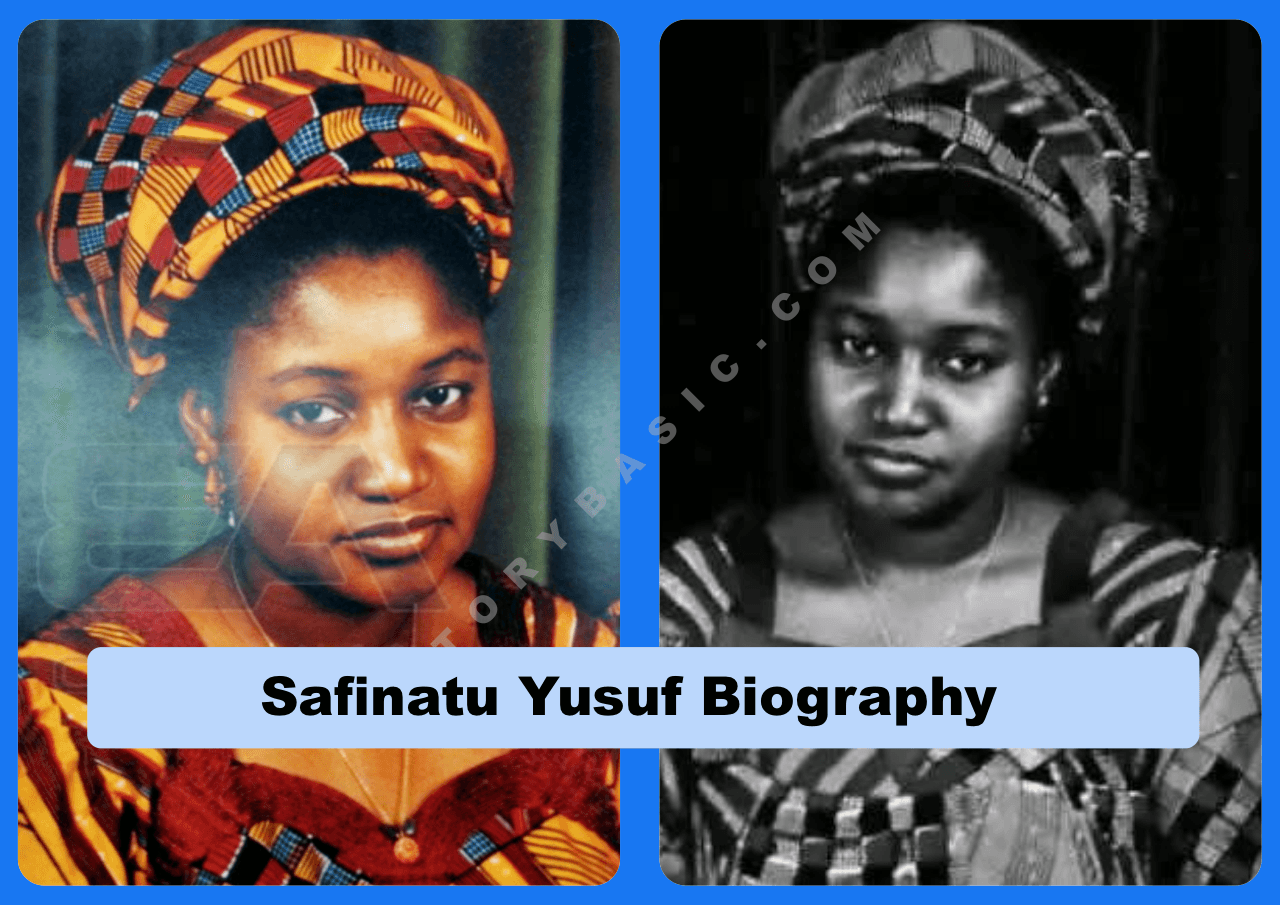
Safinatu Yusuf, widely known as Hajiya Safinatu Buhari, was one of Nigeria’s most quietly dignified public figures. As the first wife of military head of state Muhammadu Buhari, she served as Nigeria’s First Lady from December 1983 to August 1985 — a brief but historically significant tenure. Despite the prominence of her role, she remained notably private throughout her life.
Born into a modest northern Nigerian family, Safinatu trained as a teacher and embodied the values of discipline, faith, and resilience. Her life was marked by both privilege and profound personal trials, including a high-profile divorce, the loss of two children, and a years-long battle with diabetes that ultimately claimed her life in 2006.
Quick Facts About Safinatu Yusuf
| Detail | Information |
|---|---|
| Full Name | Safinatu Yusuf (married name: Safinatu Buhari) |
| Date of Birth | 11 December 1952 |
| Place of Birth | Jos, Plateau State, Nigeria |
| Date of Death | 14 January 2006 |
| Age at Death | 53 years |
| Ethnicity | Fulani |
| State of Origin | Katsina State (Mani Local Government) |
| Profession | Teacher; First Lady of Nigeria |
| Spouse | Muhammadu Buhari (m. 1971–1988, divorced) |
| Children | Five (Zulaihat, Fatima, Hadiza, Safinatu Lami, Musa) |
| Education | Women Teachers’ Training College, Katsina (Grade II Certificate, 1971) |
| Famous For | First Lady of Nigeria (1983–1985); first wife of President Muhammadu Buhari |
Early Life and Family Background
Safinatu Yusuf was born on 11 December 1952 in Jos, Plateau State, to Alhaji Yusufu Mani and Hajia Hadizatu Mani. She was one of thirteen children in the Mani household and belonged to the Fulani ethnic group of northern Nigeria. Her family hailed from Mani Local Government Area in Katsina State, and her upbringing was deeply rooted in Islamic tradition and northern Nigerian culture.
Her father, Alhaji Yusufu Mani, was a man of some standing who later served as Private Secretary to Umaru Musa Yar’Adua, who was then Commissioner for Lagos Affairs in the First Republic’s Federal Cabinet. This appointment prompted the family’s relocation from the north to Lagos State, exposing young Safinatu to a broader Nigerian experience at a formative age.
Education
Safinatu began her formal schooling at Tudun Wada Primary School in Kaduna between 1959 and 1960. After her family moved to Lagos, she eventually returned north to pursue further studies at the Women Teachers’ Training College in Katsina. She graduated in 1971 with a Grade II Teachers Certificate, the same year she got married.
She was notably proficient in both English and Arabic, a reflection of her dual grounding in secular and Islamic education. Despite her qualification, Safinatu never actively practiced teaching as a profession — her marriage and subsequent role as a military officer’s wife took precedence over a formal career.
Marriage to Muhammadu Buhari
Safinatu first met Muhammadu Buhari when she was just 14 years old. Buhari had accompanied his friend, the late General Shehu Musa Yar’Adua, to visit Safinatu’s father. A relationship developed between the two, and in December 1971 — just two days after her college graduation — she and Buhari were married. She was 18 years old at the time.
The couple went on to have five children together: four daughters — Zulaihat, Fatima (Magajiya), Hadiza (Nana), and Safinatu Lami — and one son, Musa. Tragically, two of their children predeceased them. Musa died young from sickle cell anaemia, and Zulaihat passed away in November 2012, also due to sickle cell complications, just two days after giving birth.
Life as Nigeria’s First Lady (1983–1985)
When Muhammadu Buhari led a military coup on 31 December 1983 that ousted President Shehu Shagari, Safinatu Yusuf became the First Lady of Nigeria — the seventh in the country’s history. Her assumption of the role was quiet, in keeping with the austere tone of the new military regime.

Unlike first ladies in later civilian administrations, Safinatu maintained a deliberately low profile. She did not maintain a personal office or support staff at Dodan Barracks, the seat of government. She appeared sparingly in public, primarily to host visiting foreign dignitaries and their spouses, and to participate in official state functions alongside her husband. Her style was traditional and minimal, always reflecting her Fulani heritage.
Her tenure lasted just 20 months. On 27 August 1985, General Ibrahim Babangida overthrew Muhammadu Buhari in a palace coup, ending both Buhari’s government and Safinatu’s time as First Lady. She relocated to Kaduna with her children following the change in power.
Divorce and Later Years
The years following the coup were deeply difficult for Safinatu. While Buhari was detained in prison after being ousted, rumours circulated that Safinatu had accepted financial assistance from the Babangida government — something her husband had warned against. Though never officially confirmed, this strain is believed to have contributed to the breakdown of their marriage.
In 1988, after 17 years together, Muhammadu Buhari divorced Safinatu. The exact reasons have never been publicly stated by either party, and the matter remains a private chapter of Nigerian political history. Buhari went on to marry his second wife, Aisha Halilu, in December 1989.
Safinatu lived quietly after the divorce, far from the public eye. She continued to raise her children and maintained her faith and sense of dignity despite the upheaval of her personal circumstances.
Health Struggles and Death
In 1998, Safinatu Yusuf was diagnosed with diabetes while in the Kingdom of Saudi Arabia. She managed the illness for several years before her health declined significantly. On 14 January 2006, Safinatu Buhari died from diabetes-related complications at the age of 53. She was buried at the Unguwar Rimi cemetery in Kaduna, in accordance with Islamic rites.
Her passing marked the end of a life that had seen great heights of national prominence and quiet years of personal endurance. She was mourned by her family and by Nigerians who remembered her dignified service during a turbulent period in the country’s history.
Legacy and Historical Significance
Safinatu Yusuf’s place in Nigerian history is secure, if understated. As the seventh First Lady of Nigeria, she represented a generation of women who supported powerful men without seeking the spotlight themselves. Her reserve and discretion were, in many ways, ahead of their time — a form of quiet strength that did not demand recognition to be real.
 Trisha-Kar-Madhu-Biography-150x150.png" alt="Trisha Kar Madhu Biography: Age, Net Worth & Bhojpuri Career" loading="lazy" width="180" height="120">
Her story also speaks to the pressures faced by women in Nigeria’s political sphere, particularly under military governance. The personal losses she endured — divorce, the death of two children, illness — never diminished the grace with which she carried herself. She remains a poignant figure in modern Nigerian history.
Wrapping Up
Safinatu Yusuf lived a life shaped by history, loss, and quiet resilience. From her beginnings in Jos to the corridors of Dodan Barracks, she navigated the demands of public life without surrendering her dignity or her private self. Her story is an important reminder that history is often made not just in loud moments, but in silent endurance.
She may not have sought fame, but Safinatu’s legacy endures — as a mother, as a trained teacher who valued education, and as the woman who stood beside one of Nigeria’s most consequential leaders during a defining moment in the nation’s political journey.
Frequently Asked Questions
Q1: Who was Safinatu Yusuf?
Safinatu Yusuf, also known as Hajiya Safinatu Buhari, was a Nigerian teacher and the first wife of former President Muhammadu Buhari. She served as Nigeria’s First Lady from December 1983 to August 1985. She passed away on 14 January 2006 at the age of 53.
Q2: When and where was Safinatu Yusuf born?
She was born on 11 December 1952 in Jos, Plateau State, Nigeria. She hailed from Mani Local Government in Katsina State and was of Fulani ethnic descent.

Q3: Why did Safinatu Buhari and Muhammadu Buhari divorce?
The couple divorced in 1988, three years after Buhari was removed from power. The specific reasons were never officially disclosed. Rumours suggest it was linked to political tensions following his detention, but neither party has confirmed the details publicly.
Q4: How many children did Safinatu Yusuf have?
Safinatu had five children with Muhammadu Buhari: daughters Zulaihat, Fatima, Hadiza, and Safinatu Lami, plus a son named Musa. Tragically, two of her children — Musa and Zulaihat — died from sickle cell anaemia complications.
Q5: What was Safinatu Yusuf’s cause of death?
Safinatu Yusuf died on 14 January 2006 from complications related to diabetes, which she had been living with since her diagnosis in 1998. She was 53 years old at the time of her death.
Q6: How long did Safinatu serve as First Lady of Nigeria?
She served as First Lady for approximately 20 months, from 31 December 1983 to 27 August 1985 — the duration of Muhammadu Buhari’s military government before it was overthrown by Ibrahim Babangida.
Q7: What was Safinatu Yusuf’s educational background?
She attended Tudun Wada Primary School in Kaduna and later studied at the Women Teachers’ Training College in Katsina, graduating in 1971 with a Grade II Teachers Certificate. She was also proficient in both English and Arabic.