Alphonse Daudet Biography: French Novelist & Works
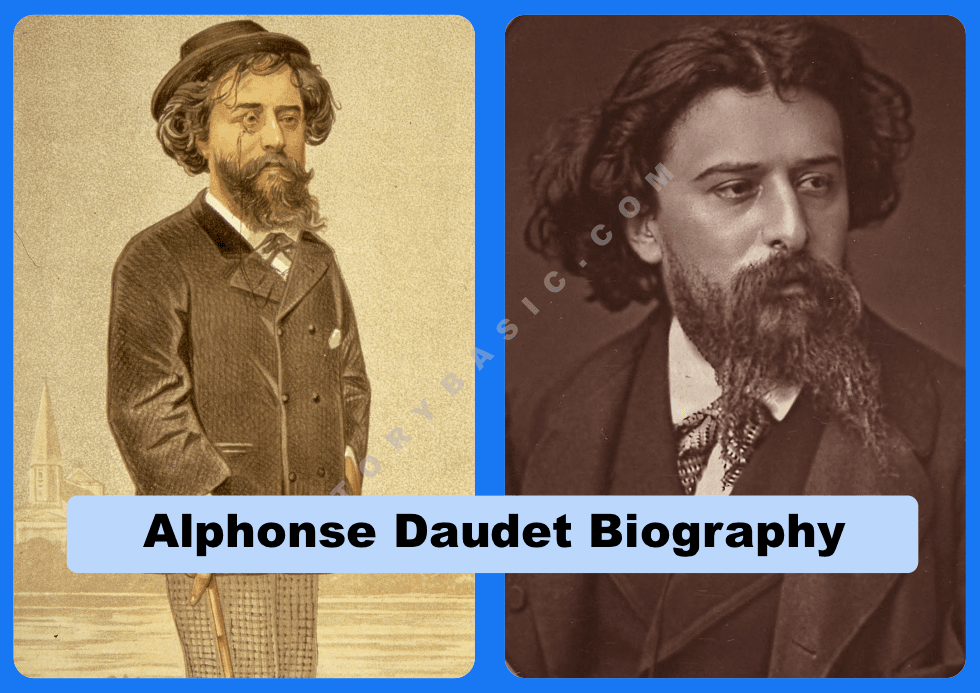
Alphonse Daudet (1840-1897) was a renowned French novelist and short story writer. Known for Letters from My Mill and Tartarin trilogy. His Provençal tales remain classics.
- Key Highlights About Alphonse Daudet
- Early Life and Family Struggles
- The Miserable Teaching Experience
- Breaking Into Paris Literary Circles
- Letters from My Mill and Provincial Fame
- The Tartarin Trilogy and Comic Genius
- Marriage and Family Life
- Major Novels and Literary Success
- The Franco-Prussian War’s Impact
- Literary Style and Philosophy
- Final Years and Illness
- Legacy and Continuing Influence
- Conclusion
- Frequently Asked Questions
Alphonse Daudet stands as one of nineteenth-century France’s most beloved literary figures. Born on May 13, 1840, in Nîmes, Provence, he became celebrated for his sentimental portrayals of southern French life. His distinctive writing style blended realism with warmth and humor, earning him the nickname “The French Dickens.” Though he passed away on December 16, 1897, at age 57, his works continue to captivate readers worldwide. Daudet’s most enduring works include Letters from My Mill and the humorous Tartarin trilogy. Unlike many contemporaries who focused on life’s darker aspects, Daudet wrote with sympathy and optimism that resonated across social classes.
Key Highlights About Alphonse Daudet
| Detail | Information |
|---|---|
| Full Name | Louis Marie Alphonse Daudet |
| Date of Birth | May 13, 1840 |
| Place of Birth | Nîmes, Provence, France |
| Date of Death | December 16, 1897 (aged 57) |
| Place of Death | Paris, France |
| Occupation | Novelist, Short Story Writer, Playwright |
| Spouse | Julia Allard (married 1867) |
| Children | Léon, Lucien, and Edmée Daudet |
| Famous Works | Letters from My Mill, Tartarin trilogy, Sapho |
| Literary Style | Realism, Naturalism, Impressionism |
| Notable Recognition | Prix de Jouy (1875) for Fromont and Risler |
Early Life and Family Struggles
Alphonse Daudet was born into a bourgeois family experiencing financial decline. His father, Vincent Daudet, owned a silk manufacturing business that faced continuous misfortune. The economic depression following the Revolution of 1848 devastated the family. In 1849, his father sold the factory and relocated to Lyon. These hardships profoundly shaped Daudet’s worldview and writing. His schooldays in Lyon were marked by depression and truancy. At fourteen, he wrote his first poems and novel. The family’s complete financial collapse in 1857 forced him to abandon his education. These experiences of loss and struggle would infuse his work with genuine empathy for human suffering.
The Miserable Teaching Experience
In 1856, Daudet worked as a schoolteacher in Alès, southern France. The position proved utterly intolerable. He served as a monitor supervising unruly pupils, and the experience traumatized him. For months afterward, he would wake in horror, believing he was still trapped in that classroom. These six unhappy months provided material for his semi-autobiographical novel Le Petit Chose, published in 1868. The title, meaning “The Little Thing,” reflected his feelings of insignificance. On November 1, 1857, Daudet abandoned teaching and fled to Paris to join his brother Ernest, a journalist. This marked the true beginning of his literary career.
Breaking Into Paris Literary Circles
In Paris, Daudet immersed himself in writing and began frequenting literary circles. His first poetry collection, Les Amoureuses, appeared in 1858 when he was eighteen. He secured employment at Le Figaro newspaper and wrote several plays. Literary communities recognized his distinctive voice and potential. In 1860, the Duc de Morny, Napoleon III’s powerful minister, appointed him as secretary. Daudet held this position until Morny’s death in 1865. The role provided financial security and exposed him to high society. His observations during these years would later inform Le Nabab, a merciless analysis of Second Empire social dynamics.
Letters from My Mill and Provincial Fame
In 1866, Daudet began publishing regionalist sketches in Parisian newspapers based on Provençal folklore. These were collected as Lettres de mon moulin in 1869. The English title, Letters from My Mill, refers to a windmill in Fontvieille, Provence, though he actually wrote in Clamart near Paris. This collection captured readers with its warmth, humor, and vivid evocation of southern French life. The stories celebrated Provençal countryside beauty and inhabitants’ simple honesty. Daudet’s refined craftsmanship and willingness to revise extensively produced lasting quality. Today, these stories remain classics regularly studied in French schools and widely read internationally.
The Tartarin Trilogy and Comic Genius
Daudet’s most famous creation emerged with Les Aventures prodigieuses de Tartarin de Tarascon in 1872. The hero, Tartarin, is a boastful, naive Provençal who claims to be a great hunter. When challenged, he embarks on a lion-hunting expedition to Algeria with hilariously disastrous results. Initially receiving lukewarm reception, Tartarin became celebrated as a brilliant comic character embodying human naïveté and boastfulness. His name entered French language as a symbol of lovable braggadocio. The character’s popularity led to two sequels: Tartarin sur les Alpes (1885) and Port-Tarascon (1890), completing the trilogy.
Marriage and Family Life
In January 1867, Daudet married Julia Allard, a talented writer who provided invaluable assistance with his work. Julia wrote under the pseudonym “Karl Steen.” Their partnership was both romantic and intellectual, enriching Daudet’s creative life. The couple had three children who all became writers. Léon Daudet became a journalist and co-editor of L’Action Française. Lucien wrote biographies and memoirs. Their daughter Edmée also pursued literary work. Julia’s support proved crucial during Daudet’s later years when illness ravaged his body.
 Worth" loading="lazy" width="180" height="120">
Major Novels and Literary Success
Daudet published Fromont jeune et Risler aîné in 1874. This novel about a jealous wife who ruins a business partnership won the prestigious Prix de Jouy from the French Academy in 1875. Countless editions were printed, establishing Daudet as a major novelist. Jack appeared in 1876, a novel about an illegitimate child martyred by his mother’s selfishness. Subsequent novels explored complex human conflicts with increasing sophistication. Le Nabab (1877) examined colonialism. Numa Roumestan (1881) portrayed antagonism between northern and southern French temperaments. Sapho (1884), drawing on Daudet’s relationship with model Marie Rieu, presented a man torn between freedom and pity.
The Franco-Prussian War’s Impact
The Franco-Prussian War of 1870-1871 profoundly affected Daudet’s writing. He enlisted in the National Guard but fled Paris during the Commune. These experiences produced Les Contes du lundi (Monday Tales) in 1873, reflecting the war’s emotional toll. Several tales dealt with wartime experiences, portraying ordinary people in historical upheaval. His play L’Arlésienne premiered in 1872 but initially failed. Its 1885 revival achieved acclaim. The war years marked Daudet’s transition from provincial subjects to broader explorations of Parisian society.
Literary Style and Philosophy
Daudet’s writing defied easy categorization. Critics called him realist, naturalist, impressionist, and independent. He rejected adherence to any literary school, maintaining such rigidity was absurd. His poetic approach to realism combined objective observation with emotional resonance. Unlike contemporaries embracing naturalism’s pessimism, Daudet wrote with sympathy and optimism. He portrayed human failings without cruel judgment. His prose produced appealing tenderness without sentimentality. Like Dickens, he wrote about the poor with genuine compassion, anticipating later developments in French fiction.
Final Years and Illness
In 1894, Daudet was diagnosed with tertiary syphilis, causing severe pain, blindness, and paralysis. Despite deteriorating health, he continued writing. He kept notebooks detailing his disease’s effects, later published as In the Land of Pain. His ability to find meaning in suffering exemplified his resilience. He died in Paris on December 16, 1897, at age 57.
Legacy and Continuing Influence
Though never elected to the French Academy, Daudet remained beloved throughout his life. He saw himself as a marchand de bonheur, a merchant of happiness. Today, select short stories have achieved classic status in French schools. Letters from My Mill remains his most prominent work. The Tartarin trilogy continues delighting readers, and numerous French schools bear his name.
Conclusion
Alphonse Daudet’s journey from impoverished Nîmes childhood to literary prominence exemplifies talent and perseverance. His forty-year career produced poetry, plays, novels, and short stories earning worldwide recognition. He captured Provence’s beauty and human psychology’s depths with equal skill. His sympathetic portrayal of human failings gave his work enduring resonance. He wrote with warmth and humor even when addressing pain. Though illness shortened his life, Daudet’s literary legacy remains secure, with his best works speaking to universal human experiences.
 Worth, Age" loading="lazy" width="180" height="120">
Frequently Asked Questions
Q1: Who was Alphonse Daudet?
Alphonse Daudet was a French novelist and short story writer born May 13, 1840, in Nîmes, Provence. He’s best known for Letters from My Mill and the Tartarin trilogy. He died December 16, 1897, at age 57.
Q2: What are Alphonse Daudet’s most famous works?
His most famous works include Letters from My Mill, the Tartarin trilogy, and novels Fromont and Risler, Sapho, and Le Nabab. His short story collection Monday Tales also achieved popularity.
Q3: Why was Daudet called “The French Dickens”?
Like Dickens, he wrote sympathetically about the poor and downtrodden. Both shared vivid prose styles and created memorable characters embodying universal qualities.

Q4: What was Letters from My Mill about?
Letters from My Mill is a collection celebrating rural Provence’s beauty and charm. The stories portray peasant life and folklore with warmth and humor, establishing Daudet as a master storyteller.
Q5: Did Alphonse Daudet have a family?
He married Julia Allard in 1867, a writer who supported his work. They had three children: Léon, Lucien, and Edmée, all of whom became writers.
Q6: What illness affected Daudet’s later life?
Diagnosed with syphilis in 1894, Daudet suffered severe pain, blindness, and paralysis. He continued writing and kept detailed notebooks about his suffering, published as In the Land of Pain.
Q7: Is Alphonse Daudet still read today?
His best short stories remain classics taught in French schools. Letters from My Mill continues being widely read. The Tartarin trilogy retains popularity for its humor and vitality.