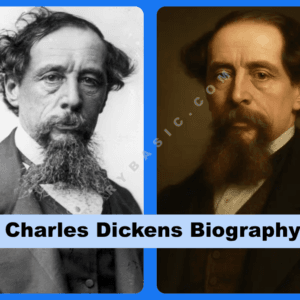
Frederick Douglass biography explore the inspiring life, early years, abolitionist work, education, legacy, and impact of one of America’s most powerful voices for freedom.
- Key Highlights of Frederick Douglass Biography
- Early Life and Background
- Education and Early Development
- Escape from Slavery and New Identity
- Career and Major Achievements
- Personal Life and Family
- Achievements, Awards, and Honors
- Contributions, Impact, and Legacy
- Conclusion
- FAQs About Frederick Douglass Biography
Frederick Douglass was one of the most influential figures in American history — an escaped slave who rose to become a writer, orator, abolitionist, and statesman. His story is not just about overcoming personal hardship; it’s about reshaping the moral direction of a nation. Reading Frederick Douglass’s biography reminds us that the struggle for justice and equality is both deeply personal and profoundly collective. His voice, once silenced by slavery, became one of the strongest ever to demand human rights for all.
Key Highlights of Frederick Douglass Biography
| Field | Information |
|---|---|
| Full Name | Frederick Augustus Washington Bailey (later Frederick Douglass) |
| Date of Birth | February 14, 1818 |
| Place of Birth | Talbot County, Maryland, U.S. |
| Date of Death | February 20, 1895 |
| Nationality | American |
| Occupation | Abolitionist, writer, orator, statesman |
| Known For | Leading figure in the abolitionist movement; former enslaved person who became a national leader of the anti-slavery movement |
| Spouse | Anna Murray Douglass (m. 1838–1882); Helen Pitts Douglass (m. 1884–1895) |
| Children | Five (Rosetta, Lewis, Frederick Jr., Charles, and Annie Douglass) |
| Notable Works | Narrative of the Life of Frederick Douglass, an American Slave (1845), My Bondage and My Freedom (1855), Life and Times of Frederick Douglass (1881) |
| Net Worth (Historical Context) | Not financially wealthy; his legacy is measured in social impact rather than fortune |
| Legacy | Symbol of courage, intellect, and freedom — a transformative leader in human rights and racial justice |
Early Life and Background
Frederick Douglass was born into slavery in Maryland in 1818. His exact birth date was never recorded — a deliberate act by slaveholders to erase the identity of those they enslaved — but Douglass later chose February 14 to celebrate as his birthday. He was separated from his mother, Harriet Bailey, at an early age and never knew his father, believed to be a white man, possibly his enslaver.
Life on the plantation exposed Douglass to the brutality of slavery. He witnessed and endured beatings, hunger, and dehumanization. Yet, even in those dark beginnings, Douglass developed a sense of self-worth and curiosity that would define his future.

Education and Early Development
In Frederick Douglass biography, one of the most striking chapters is his quest for literacy. When he was sent to Baltimore to live with Hugh and Sophia Auld, Sophia began teaching him the alphabet. Her husband, however, forbade it, saying education would “spoil” a slave. Those words changed Douglass’s life — he realized that literacy was the key to freedom.
He secretly continued learning by reading newspapers, copying letters, and befriending poor white children who shared their knowledge. Through books like The Columbian Orator, he found both political awareness and personal empowerment. His education became his rebellion — a silent, powerful protest against enslavement.
Escape from Slavery and New Identity
In 1838, Douglass successfully escaped from bondage. Using borrowed identification papers and disguised as a sailor, he fled north to freedom, eventually settling in New Bedford, Massachusetts. There, he adopted the name “Douglass,” inspired by a character in Sir Walter Scott’s poem The Lady of the Lake.
That decision marked the beginning of a new life — one defined by intellect, activism, and relentless advocacy for justice.
Career and Major Achievements
Frederick Douglass’s rise from slavery to international prominence is one of history’s most inspiring transformations.
- Public Speaking and Abolitionist Work:
In the 1840s, Douglass began speaking at anti-slavery meetings. His eloquence stunned audiences — many could not believe an escaped slave could speak with such power and intellect. - Literary Works:
In 1845, Douglass published his first autobiography, Narrative of the Life of Frederick Douglass, an American Slave. The book was a revelation — an unfiltered, first-hand account that exposed the cruelty of slavery to a wide audience. Its success made him a global symbol of resistance. - International Advocacy:
Fearing capture, Douglass traveled to Ireland and Britain, where he continued his lectures and gained supporters who helped purchase his legal freedom. - Newspaper Publishing:
He founded The North Star, an abolitionist newspaper, in 1847, which became a vital voice for anti-slavery thought and Black empowerment. - Civil War Role:
During the U.S. Civil War, Douglass met President Abraham Lincoln and advocated for the enlistment of Black soldiers. His leadership helped influence policies that shaped the 13th Amendment, which abolished slavery. - Government Appointments:
Later in life, he held several federal positions, including U.S. Marshal for the District of Columbia and Minister Resident and Consul General to Haiti — achievements remarkable for any man of his era, and extraordinary for a formerly enslaved one.
Personal Life and Family
Douglass’s personal life reflected his values — education, equality, and resilience. He married Anna Murray, a free Black woman who played a crucial role in his escape and early stability. They had five children, several of whom followed in his activist footsteps.

After Anna’s death, Douglass married Helen Pitts, a white feminist and abolitionist. Their interracial marriage in 1884 stirred controversy, but Douglass defended it firmly, stating that his first marriage was to someone of his own color, and his second was to someone of his own mind.
Achievements, Awards, and Honors
While Frederick Douglass lived in a time when formal honors were rare for Black Americans, his legacy has been richly celebrated posthumously.
- U.S. postage stamps and monuments dedicated in his name.
- Numerous schools, universities, and streets across the U.S. bear his name.
- In 2020, Douglass’s 1852 speech, “What to the Slave Is the Fourth of July?” was still cited as one of America’s most powerful critiques of hypocrisy and freedom.
His writings continue to appear in academic curricula worldwide — a testament to his enduring influence on civil rights and education.
Contributions, Impact, and Legacy
The Frederick Douglass biography cannot be complete without addressing his lasting legacy. Douglass transformed how the world understood race, equality, and democracy. He used his life story to prove that intellect and moral courage were not bound by race or circumstance.
He inspired later generations — from Martin Luther King Jr. to contemporary human rights advocates — who cite him as a foundational voice in the global fight for justice. His speeches and writings remain urgent reminders that freedom is not merely granted but earned through struggle and truth-telling.
Conclusion
Frederick Douglass’s story is one of courage, transformation, and moral clarity. Born into bondage, he rose through intellect and conviction to stand before presidents and parliaments as an equal. His life remains a blueprint for resilience — a testament that education, truth, and courage can break any chain.

What makes Frederick Douglass’s biography timeless is not just his success, but his unwavering belief that one person’s voice — spoken boldly and justly — can change the course of history.
FAQs About Frederick Douglass Biography
1. Who was Frederick Douglass?
Frederick Douglass was an American abolitionist, writer, and orator who escaped from slavery and became a leading voice for human rights and racial equality.

2. What is Frederick Douglass best known for?
He is best known for his autobiographies and speeches that exposed the realities of slavery and championed freedom and equality.
3. How did Frederick Douglass escape slavery?
He escaped in 1838 using borrowed identification papers and traveled by train and steamboat to New York, eventually settling in Massachusetts.
4. Did Frederick Douglass meet Abraham Lincoln?
Yes. Douglass met President Lincoln multiple times and influenced federal policies during the Civil War, including the recruitment of Black soldiers.
5. What is Frederick Douglass’s lasting legacy?
His legacy lies in his advocacy for civil rights, education, and equality — shaping the conscience of America and inspiring global movements for justice.